


If you're missing a tooth, two of the most common treatment options are a dental bridge and a dental implant. Both can restore the appearance and function of your smile, but they differ in cost, longevity, treatment time, and how they affect your oral health.
Understanding the differences between a dental bridge and an implant can help you choose the option that best suits your needs.
In this guide, we'll compare how each treatment works, their advantages and disadvantages, costs, lifespan, and the factors that may influence your decision.
What Is a Dental Bridge and How Does It Work?
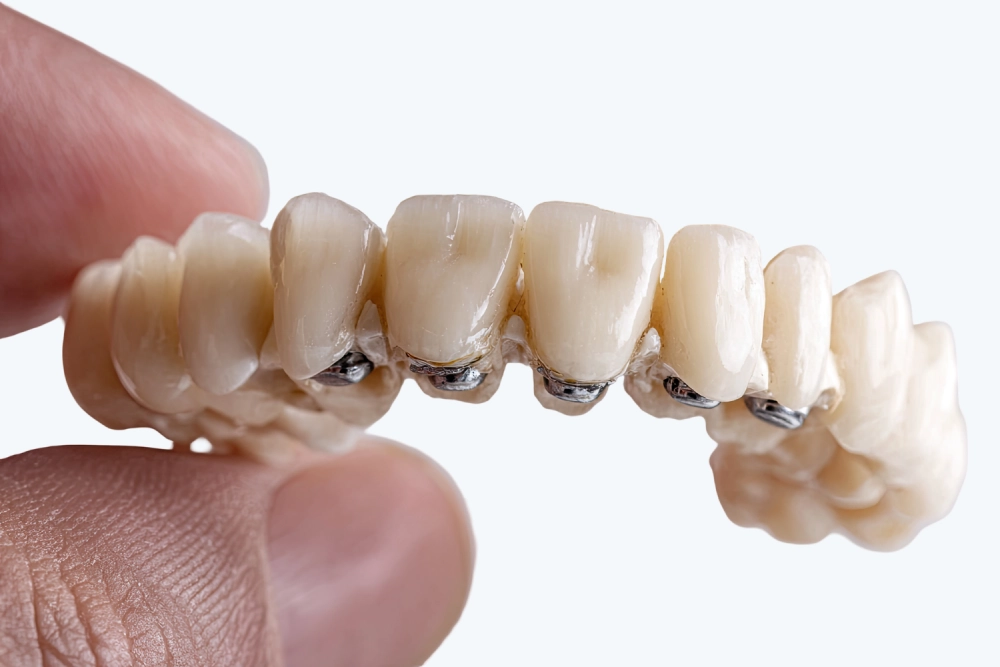
A dental bridge is a fixed restoration used to replace one or more missing teeth. It consists of an artificial tooth, known as a pontic, which is supported by the natural teeth or dental implants on either side of the gap.
To place a traditional bridge, the supporting teeth are prepared and fitted with dental crowns that hold the replacement tooth securely in position. Once in place, the bridge restores the appearance of your smile and helps improve chewing and speaking function.
Unlike dental implants, a dental bridge replaces only the visible portion of the missing tooth. It does not replace the tooth root beneath the gumline, which is an important consideration when comparing dental bridges and implants.
What Are the Types of Dental Bridges?
There are several types of dental bridges, and the most suitable option depends on the location of the missing tooth, the condition of the surrounding teeth, and your overall oral health.
- Traditional Dental Bridge: A traditional bridge is the most common type. It uses dental crowns placed on the teeth on either side of the gap to support the replacement tooth. This option works well when healthy, natural teeth are available on both sides.
- Cantilever Dental Bridge: A cantilever bridge is supported by a crown on only one adjacent tooth. It is typically used in areas of the mouth that experience less biting force, such as the front teeth.
- Maryland Dental Bridge: Also known as a resin-bonded bridge, a Maryland bridge uses metal or porcelain wings attached to the back of neighbouring teeth rather than full crowns. Because it requires minimal alteration of healthy teeth, it is often used to replace front teeth.
- Implant-Supported Bridge: An implant-supported bridge is secured using dental implants instead of natural teeth. This option can be particularly beneficial when replacing multiple missing teeth, as it provides excellent stability without placing additional strain on neighbouring teeth.
What Are the Pros and Cons of Dental Bridges?
Like any dental treatment, bridges come with both advantages and limitations. Understanding the pros and cons can help you decide whether a dental bridge is the right solution for your needs.
Benefits of Dental Bridges
- No surgery is required for most traditional bridge treatments
- Shorter treatment time, often completed within a few weeks
- Lower upfront cost compared to dental implants
- Natural-looking results that restore the appearance of your smile
- Improved chewing and speaking function after tooth loss
Limitations of Dental Bridges
- Healthy neighbouring teeth must be altered to support the bridge
- Does not replace the tooth root, so bone loss can still occur beneath the missing tooth
- Requires careful cleaning around and underneath the bridge
- May need replacement over time, typically after 10 to 15 years, depending on wear and maintenance
For many patients, dental bridges provide a reliable and effective way to replace missing teeth. However, when comparing dental implants vs. bridges, factors such as longevity, bone preservation, and long-term maintenance are also important considerations.
What Is a Dental Implant and How Does It Work?
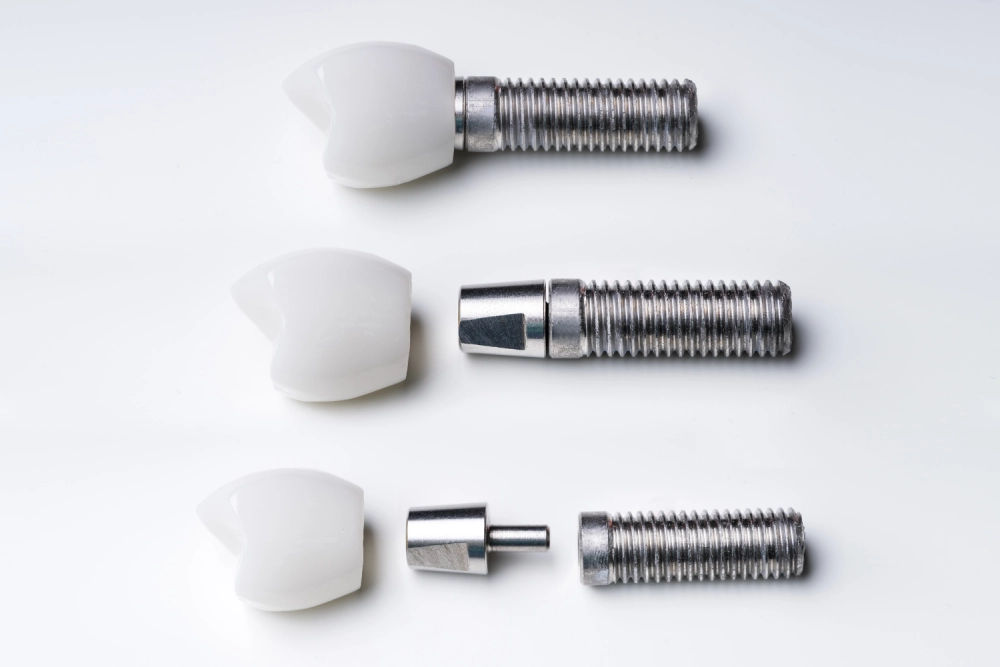
A dental implant is an artificial tooth root that is placed into the jawbone to support a replacement tooth. Unlike a dental bridge, which relies on neighbouring teeth for support, how a dental implant works by being secured directly within the bone, creating a stable and independent foundation for a crown, bridge, or denture.
A dental implant typically consists of three components: the implant post, the abutment, and the restoration. Over time, the implant fuses with the jawbone through a natural process called osseointegration, allowing it to function much like a natural tooth root.
Because implants replace both the visible tooth and the root beneath the gumline, they can help restore chewing function while also supporting long-term jawbone health.
What Are the Different Types of Dental Implants?
There are several types of dental implants available, and the right option depends on factors such as bone volume, treatment goals, and the number of teeth being replaced.
- Endosteal Implants: The most common type of dental implant. These are placed directly into the jawbone and are used to support single crowns, bridges, and full-arch restorations.
- Zirconia Implants: Made from ceramic rather than titanium, zirconia implants provide a metal-free alternative and are often chosen for their aesthetic appearance.
- Zygomatic Implants: Longer implants that anchor into the cheekbone (zygoma) instead of the upper jaw. They are typically used for patients with significant bone loss in the upper jaw.
- Pterygoid Implants: Placed in the dense bone at the back of the upper jaw, these implants can provide support for full-arch restorations and may reduce the need for bone grafting.
- Subperiosteal Implants: Positioned on top of the jawbone beneath the gum tissue rather than within the bone. These are less common today but may be considered in certain cases where bone volume is limited.
- All-on-4 and All-on-6 Implants: Full-arch treatment options that use four or six strategically placed implants to support a complete set of replacement teeth.
The most suitable implant type will depend on your oral health, bone structure, and treatment objectives, which your dentist can assess during a consultation.
What Are the Pros and Cons of Dental Implants?
Dental implants are widely regarded as one of the most advanced tooth replacement options available. However, like any treatment, they have both benefits and limitations. Let’s look into the advantages and disadvantages of dental implants:
Benefits of Dental Implants
- Replace both the tooth and root, helping preserve jawbone structure
- Long-lasting solution, with many implants lasting decades with proper care
- Do not affect neighbouring teeth
- Natural appearance and feel
- Excellent stability for eating, speaking, and smiling
- Can replace one tooth, multiple teeth, or a full arch
Limitations of Dental Implants
- Higher upfront cost compared to dental bridges
- Require a surgical procedure
- Treatment can take several months due to healing and osseointegration
- May require additional procedures, such as bone grafting, in some cases
- Not suitable for every patient, particularly those with certain medical conditions or insufficient bone volume
While dental implants often involve a greater initial investment of time and money, many patients choose them for their durability, stability, and ability to support long-term oral health.
Dental Bridge vs Implant: Key Differences at a Glance
Before we get into the details, here's the quick comparison many readers come looking for. Think of this as the snapshot, with the fuller explanations following underneath.
Dental Bridge vs Implant: Which Lasts Longer?
A dental bridge typically lasts 10 to 15 years, although its lifespan depends on the health of the supporting teeth and how well it is maintained.
A dental implant generally lasts 20 years or more, with the implant post often lasting for decades. When discussing how long dental implants last, it's important to remember that while the crown may eventually need replacement due to normal wear, the implant itself can continue functioning successfully for many years.
For long-term durability, dental implants usually have the advantage. However, both options can provide reliable results when properly cared for.
Dental Bridge vs Implant: Which Looks and Feels More Natural?
Both dental bridges and dental implants are custom-made to match your surrounding teeth, allowing them to blend naturally into your smile.
However, dental implants tend to provide the most natural feel because they are anchored directly into the jawbone, mimicking the function of a natural tooth root. This creates a stable, secure restoration that many patients find difficult to distinguish from their natural teeth.
Dental bridges can also deliver excellent aesthetic results, but they do not replace the tooth root and may feel slightly different when biting or chewing. For many patients, the results of dental implants are often considered the closest to the appearance, function, and feel of a natural tooth.
Dental Bridge vs Implant: Which Is Better for Oral Health?
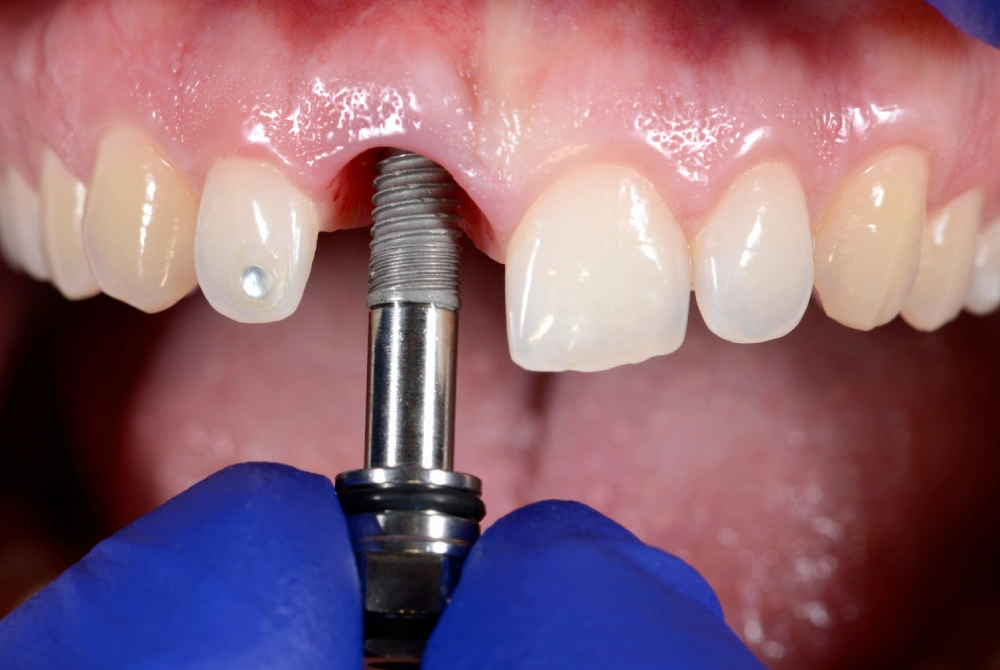
One of the biggest differences between a dental implant and a bridge is their impact on long-term oral health.
A dental bridge replaces the visible portion of the tooth but does not replace the root. As a result, the jawbone beneath the missing tooth can gradually shrink over time. Bridges also rely on neighbouring teeth for support, which means healthy teeth must be modified and may experience additional stress.
Dental implants replace both the tooth and its root, helping to stimulate the jawbone and reduce bone loss. They also function independently, preserving the structure of neighbouring teeth and making oral hygiene easier to maintain.
For patients focused on preserving jawbone health and protecting surrounding teeth, dental implants generally offer the greater long-term benefit.
Dental Bridge vs Implant: Cost Comparison
Cost is often one of the biggest factors when comparing a dental bridge vs. an implant.
A dental bridge is usually the more affordable option upfront, with prices typically ranging from £400 to £1,500, depending on the type of bridge and materials used.
The cost of dental implants is typically higher, with treatment ranging from £1,800 to £4,500 per tooth. The final price can vary based on factors such as the complexity of the case, the implant system used, and whether additional procedures, such as bone grafting, are required.
While bridges generally have a lower initial cost, they may need replacing after 10 to 15 years. Dental implants require a greater upfront investment but can often last much longer, making them a cost-effective solution for many patients over time.
Many dental practices also offer finance options to help spread the cost of treatment.
Who Is a Good Candidate for a Dental Bridge?
A dental bridge may be a suitable option if you:
- Have one or more missing teeth with healthy teeth on either side of the gap.
- Prefer a treatment option that does not require surgery.
- Need a faster tooth replacement solution.
- Already requires crowns on the neighbouring teeth.
- Have insufficient jawbone for dental implants and wish to avoid bone grafting.
- Have medical conditions that make implant surgery less suitable.
For many patients, a dental bridge provides a reliable and effective way to restore both function and appearance.
Who Is a Good Candidate for a Dental Implant?
A dental implant may be a suitable option if you:
- Have sufficient jawbone to support an implant, or are willing to undergo bone grafting if needed
- Have healthy gums and good overall oral health
- Are in good general health and suitable for minor oral surgery
- Have well-controlled medical conditions
- Do not smoke, or are willing to stop smoking during treatment and healing
- Are committed to maintaining good oral hygiene and attending regular dental check-ups
- Have a fully developed jawbone
Dental implants are often recommended for patients looking for a long-term solution that closely replicates the function and feel of a natural tooth. Even if you are not currently eligible, additional treatments may help make implant treatment possible.
Dental Bridge vs Implant: Which Option Is Best for Different Scenarios?
Sometimes the clearest way to decide is to find your own situation in the mix.
How to Choose Between a Dental Bridge and an Implant
The right choice depends on your oral health, bone density, and long-term goals. At Zental, our experienced clinicians take the time to assess your individual needs and explain all suitable treatment options, so you can make an informed decision with confidence.
Using advanced digital imaging and personalised treatment planning, we'll help determine whether a dental bridge or dental implant is the best solution for your smile.
Ready to explore your options? Book a consultation with Zental today and receive expert guidance tailored to your needs.
FAQ
Is a dental implant better than a bridge?
For most people, implants offer better long-term results, lasting longer, preserving bone, and leaving neighbouring teeth untouched. That said, bridges are a valid and effective choice for anyone who needs quicker treatment, has a tighter budget, or isn't suited to surgery.
What are the disadvantages of a dental bridge?
A bridge means permanently reshaping healthy neighbouring teeth; it doesn't prevent bone loss beneath the gap, it's a little harder to clean underneath, and it generally needs replacing every 10 to 15 years.
How long do dental bridges last?
With good care, most bridges last 10 to 15 years, though some need attention sooner depending on your cleaning habits and the health of the supporting teeth.
How long do dental implants last?
Implants can last 20 years or more, often a lifetime, with proper care. Clinical studies show 90 to 95% survival at ten years, and many implants are still going strong 25 to 30 years on.
Which option is more affordable?
A bridge has a lower upfront cost, but over a lifetime, implants often work out more cost-effective since they rarely need replacing, while bridges require periodic renewal.
Can a dental bridge be replaced with an implant later?
Yes, in many cases. Just keep in mind that any bone loss that happened while the bridge was in place may call for a bone graft first, adding a little time and cost.
Do dental implants feel more natural than bridges?
They generally do, because they're anchored right into the jawbone, so they function and feel much like your own teeth. In a study of 400 patients, 94% reported high satisfaction with their implants 8 to 14 years after treatment.
Which option requires less maintenance?
Implants are easier to care for, since you brush and floss them just like natural teeth. Bridges call for special tools such as floss threaders or a water flosser to clean under the false tooth and around the supports.


