


Many patients who come to our dental clinic are unsure whether dental implants can really fix the problems they are dealing with, whether that is broken teeth, gum issues, or missing teeth that affect their smile and confidence. This uncertainty is very normal.
In this article, we are sharing real dental implant before and after results from patients treated at our London and Milton Keynes clinics. While results vary from person to person, these examples give a clear idea of what dental implant treatment can achieve.
Before and After Pictures of How We Fixed Failing Upper Teeth with Dental Implants
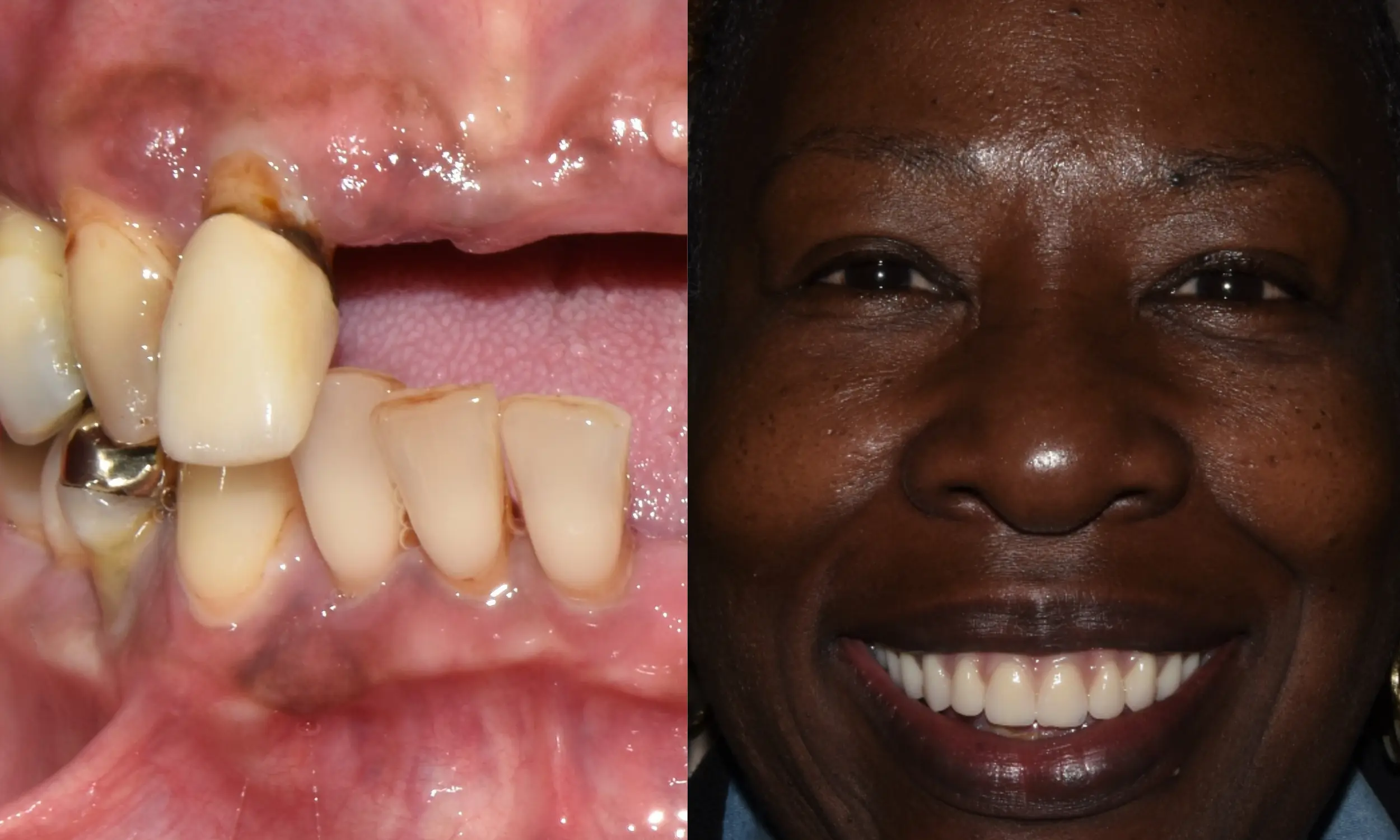
A patient with failing upper teeth was struggling with both her smile and her ability to chew food comfortably. For this case, we recommended the All-on-4 “teeth in a day” treatment for her upper teeth after careful planning and assessment. As a result, we were able to replace the failing teeth with a secure implant-supported bridge, restoring her smile, confidence, and full chewing function.
Before and After Pictures of How We Fixed Badly Damaged Teeth with Dental Implants
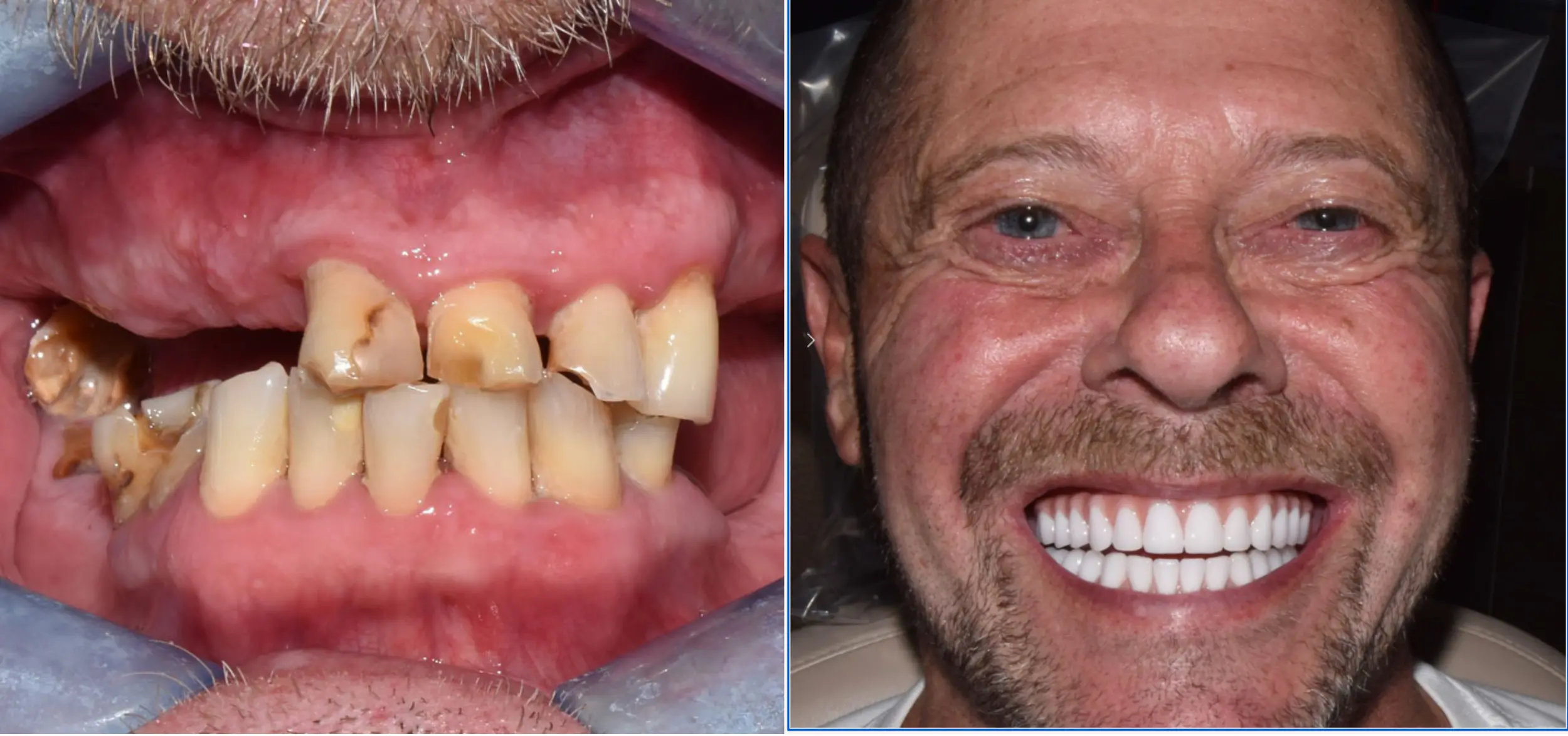
A patient with badly damaged and broken teeth had been dealing with pain, sensitivity, and difficulty eating for many years. The condition also affected his confidence, especially when smiling. For this case, we carried out “teeth in a day” treatment, replacing the damaged teeth with a full implant-supported bridge. As a result, he can now eat comfortably, smile with confidence, and enjoy life free from dental pain.
Before and After Pictures of How We Replaced Missing Teeth with Dental Implants
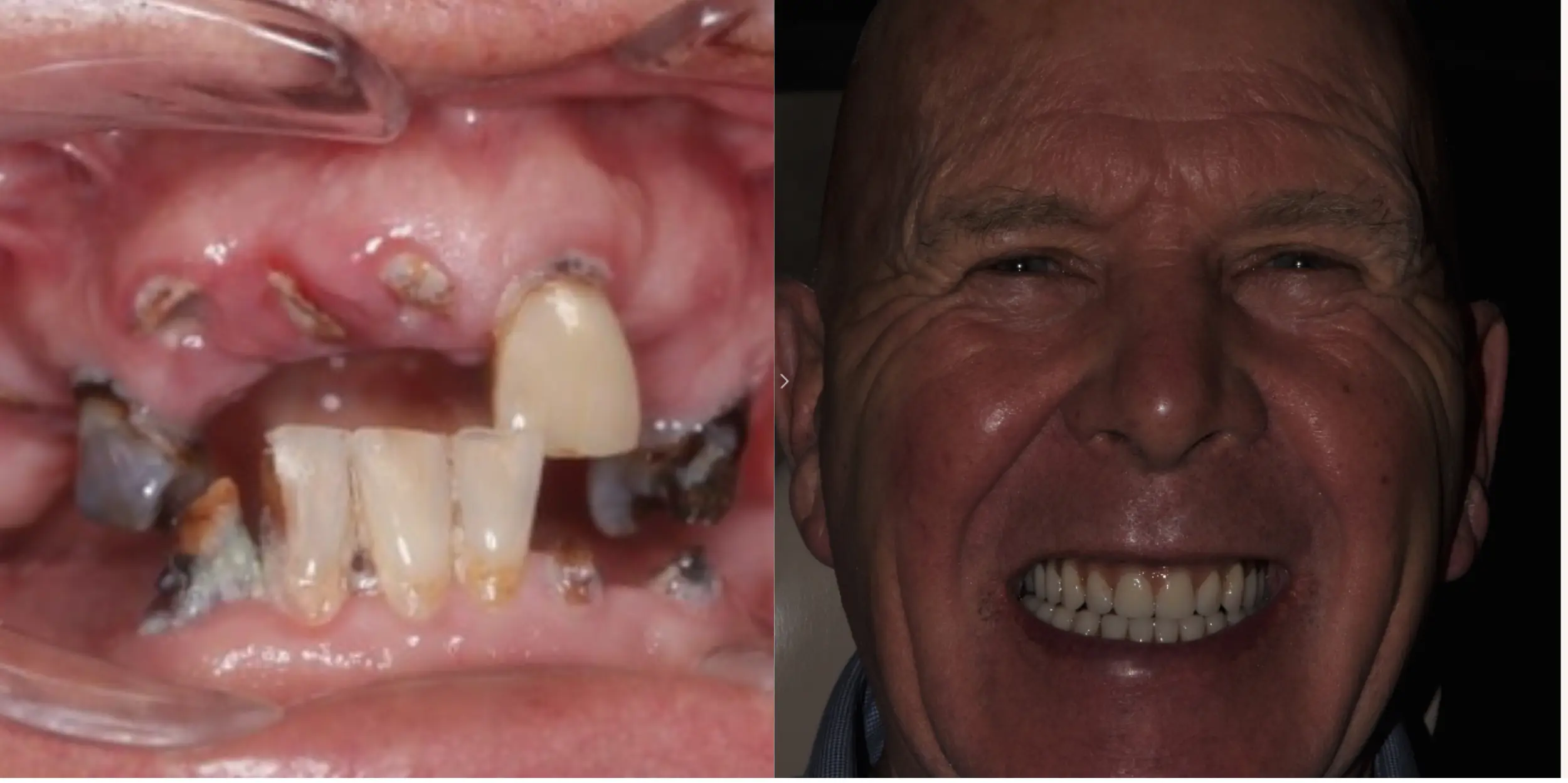
After years of struggling with multiple missing teeth and difficulty eating, a patient was finding dentures uncomfortable and unreliable. He wanted a fixed solution that would restore both his confidence and his ability to chew properly.
For this case, we carried out “teeth in a day” treatment, removing the failing teeth and replacing them with implant-retained bridgework. As a result, he now has a full set of fixed teeth, can enjoy food comfortably, and feels confident smiling and spending time with friends and family again.
Before and After Pictures of How We Treated Advanced Gum Disease with Dental Implants
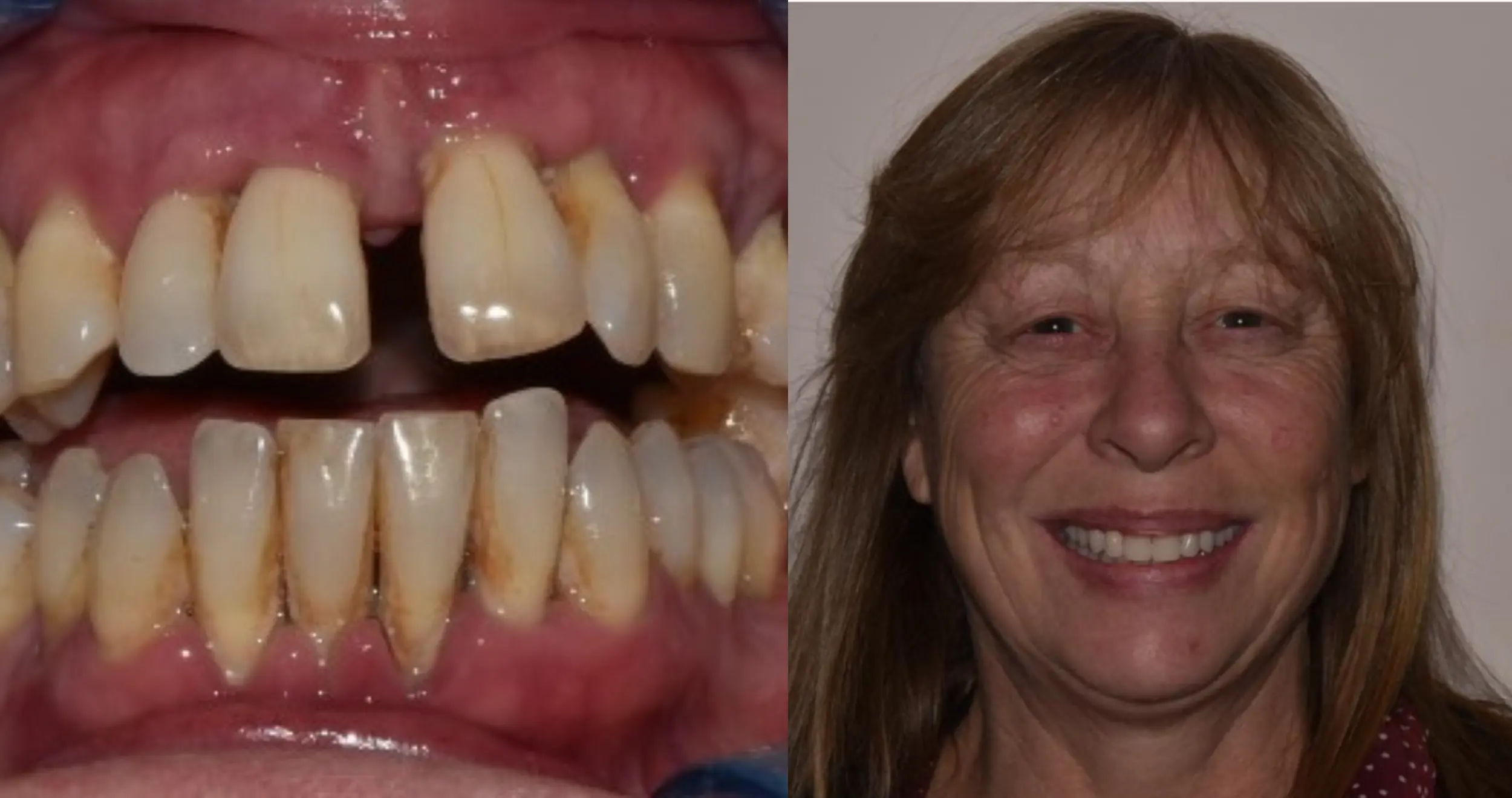
Following years of progressive gum disease, a patient arrived with loose teeth that had started to shift noticeably, including a new gap forming between her front teeth. She was on the verge of losing her upper teeth entirely, which raised the difficult prospect of lifelong dentures.
For this case, we first brought the gum disease under control before proceeding with “teeth in a day” treatment on the upper arch, replacing the affected teeth with dental implants. Her lower teeth did not require intervention, as they were in a much healthier condition.
As a result, her upper teeth are now fully fixed and stable again, no longer moving or shifting, and her smile, along with her confidence, has been fully restored.
Before and After Pictures of How We Corrected Severely Drifted Teeth with Dental Implants
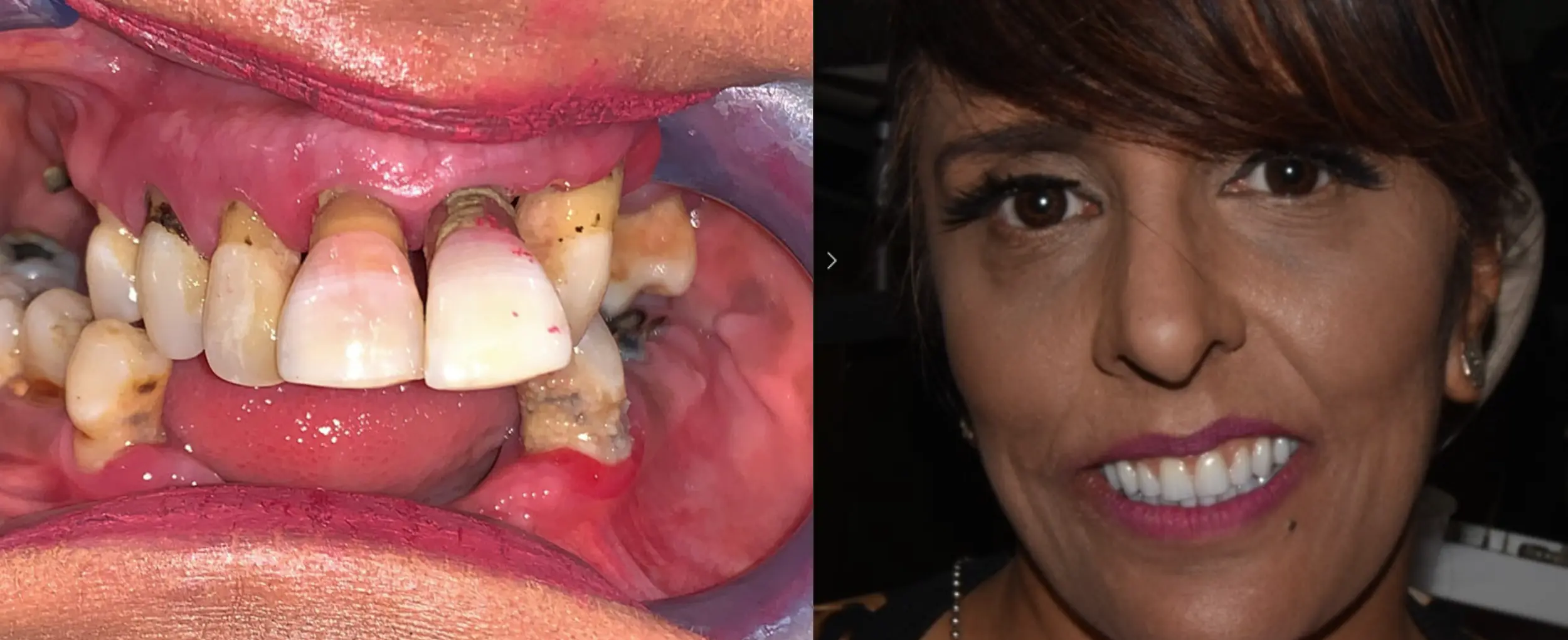
When this patient came to us, her teeth had drifted significantly, which had become a source of embarrassment and affected her confidence. She was very clear that she did not want dentures and was looking for a fixed solution from the very beginning. After careful planning, we designed a treatment approach that matched her expectations and clinical needs.
We first stabilised her gum health and removed the teeth that could not be saved before restoring her mouth with dental implants using the “teeth in a day” protocol. As a result, she left with fixed teeth in place, along with a transformation that improved her facial profile and brought back a more youthful, confident appearance.
What Factors Can Influence Your Dental Implant Treatment Results?
Dental implants are one of the most reliable treatments in dentistry, with very high success rates supported by decades of research. Most people do very well with them, but a few personal and health factors can influence how well they heal and how long they last. The type of dental implants used can also play a role in planning the treatment, as different cases may require different approaches depending on bone levels and clinical needs.
Bone Density and Quantity
Your jawbone needs to be strong and thick enough to hold an implant firmly in place. Some areas of the mouth naturally have softer bone, especially in the upper back jaw, which can make treatment more complex. If there is not enough bone, extra procedures like bone grafting or a sinus lift may be needed before placing implants.
At Zental, we carefully check your bone using detailed 3D scans before starting treatment. This helps us plan safely and choose the best approach for each patient.
Smoking
Smoking can have a strong negative effect on healing after implant surgery. It reduces blood flow and slows down the body’s ability to heal, which can increase the risk of implant failure and bone loss around the implant.
For this reason, patients are advised to stop smoking before surgery and avoid it during the early healing period. While smoking does not always stop you from having implants, it is an important factor that needs to be considered in your treatment plan.
Oral Hygiene and Maintenance
How you take care of your dental hygiene and implants at home is very important for long-term success. If plaque builds up around an implant, it can lead to inflammation and bone loss, similar to gum disease.
Good brushing, flossing, and regular hygiene visits help keep implants healthy. Patients who maintain good oral care and attend routine check-ups tend to have very high long-term success rates.
Systemic Health Conditions
Your overall health can also affect how well you heal after implant surgery. Conditions such as uncontrolled diabetes or low vitamin levels can slow healing and reduce success rates. Some medical treatments, like chemotherapy or radiotherapy, may also affect whether implants are suitable at that time.
At Zental, we always review your full medical history before treatment. This is not to exclude you, but to make sure your care is planned safely around your health needs.
Surgical Technique and Expertise
The way implants are placed has a big impact on healing and long-term results. Accurate placement helps the implant bond properly with the bone and stay stable for many years.
Implant success rates are very high when treatment is carried out with proper planning and experience. At Zental, implant procedures are performed by specialists with advanced training in implant dentistry and oral surgery, which helps ensure safe treatment and predictable outcomes.
Wrapping Up
The dental implant before and after cases above reflect a genuine range of clinical situations, from advanced gum disease and full-arch breakdown to single missing teeth. Each one shows what careful planning, skilled placement, and good aftercare can achieve.
If you've been putting off dealing with a dental problem, the sooner you act, the more bone you preserve, and the more treatment options remain open to you. Every plan at Zental is built around your specific needs, your bone structure, and your health profile.
Ready to find out what's possible for your smile? Book a consultation with our implant team today.
FAQ
How do you get the best results from dental implants?
Start by choosing an experienced implant specialist and attending every pre-treatment appointment, including bone scans and health reviews. Start by choosing an experienced implant specialist and attending every pre-treatment appointment, including scans and health checks. This is important because dental implants work by fusing with the jawbone, so planning and bone assessment are key to long-term success.
After surgery, follow your care instructions closely, avoid smoking, and stick to a strong oral hygiene routine at home. Regular hygiene check-ups (every 3 to 6 months) protect your investment long-term. The right implant type and placement approach are determined during your initial assessment, so the planning stage is just as important as the surgery itself.
What does the smile look like before dental implants are placed?
It really varies from person to person. Some patients have obvious gaps where teeth are missing. Others have visibly decayed, broken, or stained teeth, gum recession, or teeth that have drifted out of alignment. In cases with long-term tooth loss, you might notice a sunken look around the cheeks and jawline where bone has been lost. Failing crowns, cracked fillings, and ill-fitting temporary teeth are common, too.
Will my dental implants look natural after the procedure?
Yes. Modern implant crowns are custom-made to match your surrounding teeth in shade, shape, and size. Once the final crown is fitted and healing is complete, it's typically impossible to tell the difference between an implant and a natural tooth. The gum tissue heals and adapts around the crown naturally over time, framing it just like it would a real tooth. The before and after cases on this page show exactly how natural the final outcomes look.
How long does it take to see the final results from dental implants?
For single-tooth implants, the final crown is usually placed 3 to 4 months after the implant goes in. For full-arch cases using All-on-4 or All-on-6 systems, a provisional bridge is fitted on the same day as surgery, so you're never without teeth. The final permanent bridge is then placed 3 to 6 months later.
Who is not suitable for dental implants?
Patients with uncontrolled diabetes, active and untreated gum disease, or significant bone loss (without bone grafting) may not be immediate candidates. The same goes for those with active cancer or undergoing chemotherapy, certain blood-clotting disorders, and children or teenagers whose jaws are still developing. Heavy smokers face elevated risks, though smoking alone doesn't automatically rule you out. A full consultation with imaging is the only way to properly assess your candidacy.
Do dental implants always look natural after healing?
In the vast majority of cases, absolutely. The final crown is designed to blend in with your existing teeth, and the gum contours adapt and settle around the implant during the healing period. In rare situations where gum recession or bone loss is more pronounced, additional soft tissue procedures might be recommended to get the best aesthetic result.
What makes dental implants better than dentures or bridges in real results?
Dental implants are different because they replace the tooth root as well as the tooth. This helps keep the jawbone healthy and prevents the bone loss that often happens after tooth loss. Unlike bridges, implants do not require filing down healthy teeth next to the gap. They also stay fixed in place, so they do not move when you eat or speak, like dentures sometimes can.
What should I expect during the healing period, and how do dental implants feel once fully healed?
The first few days after placement, expect some mild discomfort, swelling, and possibly light bruising. It's all normal and manageable with standard over-the-counter painkillers. Most patients are back to their usual routine within a week. Over the following 3 to 6 months, the implant fuses with the jawbone beneath the surface, a process you won't feel happening. Once healing is complete and the final crown is in place, the implant feels completely natural. Many patients tell us they forget it's even there when eating, talking, or smiling.


