


Losing a tooth can affect how you eat, smile, and even speak. It is also more common than many people think. Over 7% of adults worldwide have lost all their teeth, rising to 23% in people aged 60 and over.
The good news is that dental implants are widely seen as the best way to replace missing teeth. They are designed to look, feel, and function like natural teeth.
In this guide, we will explain how dental implants work, what the treatment involves, who can have them, and what recovery is like.
What Are Dental Implants?
A dental implant is a small titanium post that a dentist places into your jawbone during a minor surgical procedure. It acts like an artificial tooth root. Once it is in place, it sits under the gums and is anchored firmly in the bone, creating a strong base for a replacement tooth.
Every implant has three main parts:
- The implant post is the titanium screw placed into the bone.
- The abutment is a small connector that sits above the gum line and links the post to the tooth.
- The crown is the visible part, made to look like a natural tooth in colour, shape, and size.
Dental implants can support a single tooth, several teeth, or even a full set of teeth using systems like All-on-4 and All-on-6. Whether you are missing one tooth or many, implants are considered one of the most complete solutions because they replace both the root and the visible tooth.
How Do Dental Implants Work?
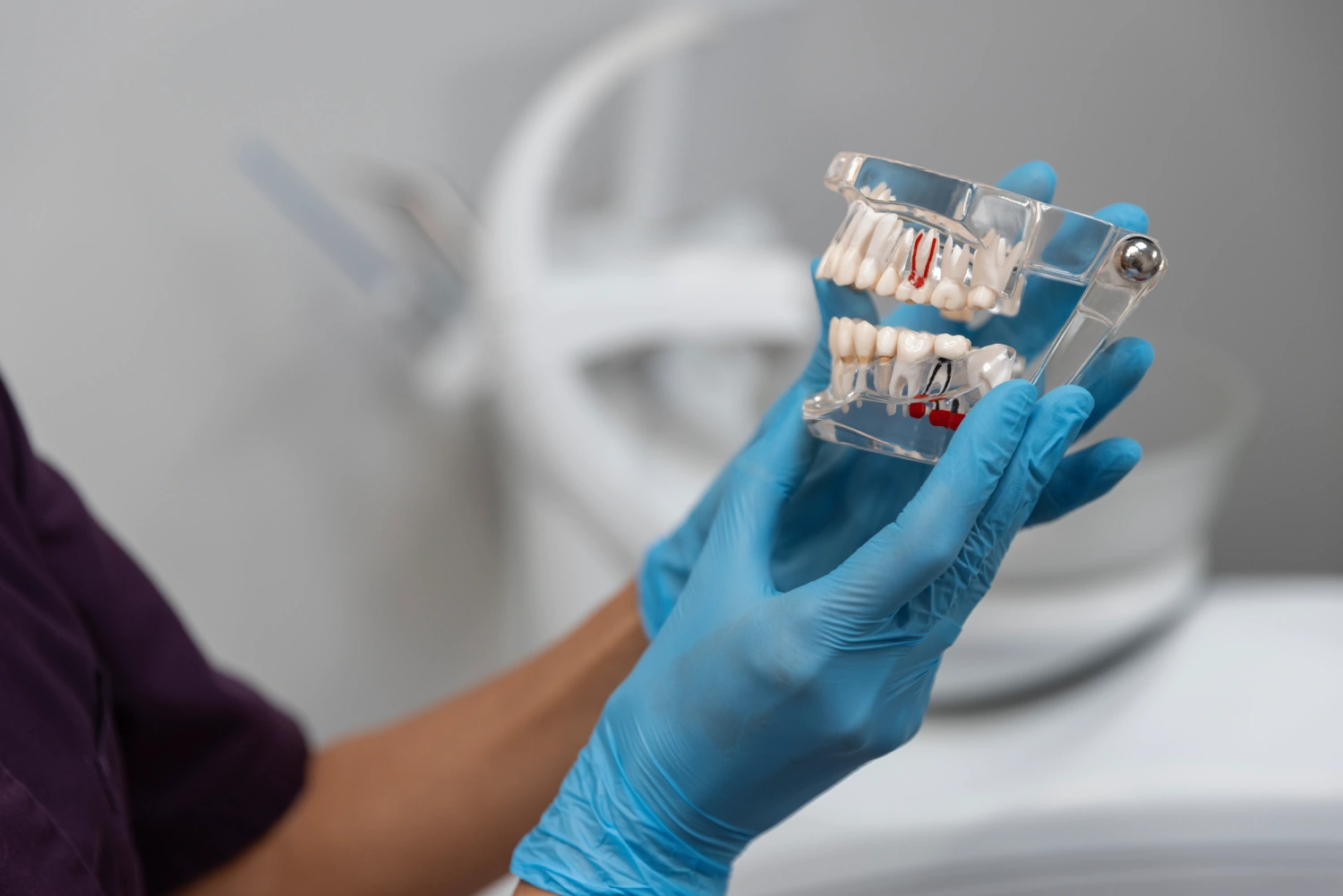
The key to dental implants' work is a natural process called osseointegration. This simply means that your jawbone grows and fuses directly onto the titanium implant, making it stable enough to handle normal biting and chewing.
This process happens in three main stages:
- First is initial healing, when the bone starts reacting to the implant right after it is placed.
- Next is bone growth, where new bone slowly forms around the implant over several weeks and months.
- Finally, full integration takes place when the implant becomes firmly locked into the jawbone and acts like a natural tooth root.
Titanium works so well because it naturally forms a thin layer on its surface that helps bone cells attach and grow.
This whole process usually takes around 3 to 6 months in the lower jaw and up to 7 months in the upper jaw.
What Are the Types of Dental Implants?

Not all dental implants are the same. The type your dentist recommends will depend on your jawbone health, how many teeth you are replacing, and your overall oral health.
- Endosteal implants are the most common type. These are small titanium screws placed directly into the jawbone. They can be used for a single tooth, several teeth, or even a full arch. The main requirement is having enough bone to support them, although bone grafting can help if needed.
- Subperiosteal implants sit on top of the jawbone but under the gum. They are usually used when there is not enough bone for an endosteal implant and bone grafting is not an option. These are less common today, but they can still be useful in specific cases.
- Zygomatic implants are used in more complex situations. Instead of the jawbone, they are anchored into the cheekbone (zygoma). They are mainly used for severe bone loss in the upper jaw and require specialist surgical skill.
- Mini dental implants are smaller in size and are often used to stabilise dentures, especially in the lower jaw. They are less invasive and more affordable, but they are not suitable for areas that deal with heavy biting forces.
- Pterygoid implants are another advanced option for patients with significant bone loss in the upper jaw. These implants are placed at the back of the upper jaw and anchored into the pterygoid bone, which is a dense bone area near the upper molars. They are often used as an alternative to bone grafting and can help support full-arch restorations.
- The All-on-4 and All-on-6 systems use four and six strategically placed implants to support a full set of teeth. These are a common option for full-mouth restoration and can often avoid the need for bone grafting.
What Conditions Are Treated with Dental Implants?
Dental implants are not only for people who have lost all their teeth. They can help in many different situations.
If you are missing a single tooth due to decay, injury, or gum disease, a single implant with a crown can replace it without affecting the teeth next to it. If several teeth are missing in the same area, an implant-supported bridge can fill the gap.
For people who have lost all their teeth in one or both jaws, full-arch options such as All-on-4 or implant-retained dentures provide a fixed and more secure alternative to removable dentures.
Dental implants can also help when your jawbone has shrunk over time, which made traditional dentures less stable. They are also used for people who were born without certain teeth.
Replacing a missing tooth early is often important, as bone loss can begin soon after a tooth is removed.
What Are the Benefits of Dental Implants?

Dental implants offer more than just a way to replace missing teeth. They also help restore normal function, improve appearance, and support long-term oral health. This combination of benefits is why they are often considered the most complete tooth replacement option.
Better Chewing and Speaking
Dental implants are fixed in place, so they don’t move. There is no slipping, clicking, or need for adhesive. This means you can eat more comfortably, speak clearly, and bite into foods like apples or meat without worry. For people who have struggled with loose dentures, this stability can make a big difference in daily life.
In fact, implant-supported teeth can restore up to 90% of natural chewing ability, while traditional dentures restore only about 20 to 25%.
Natural Look And Feel
The crown is custom-made to match your natural teeth in colour, shape, and size. Once healed, most people cannot tell the difference between an implant and a real tooth. Many patients also feel more confident smiling again because the result looks and feels natural.
Protecting Jawbone Health
Dental implants also help protect the jawbone, which makes them different from other options. When a tooth is lost, the bone underneath it starts to shrink. The jawbone can lose 40–60% of its width within the first 3–6 months, and up to 25% of its volume in the first year. Over time, this can change the shape of the face.
Implants help prevent this because they act like a natural tooth root. They pass chewing pressure into the bone, which keeps it active and healthy. Bridges and dentures do not do this, so they cannot stop bone loss.
In addition, implants don’t require shaping nearby healthy teeth like dental bridges do, and they will not get cavities. However, the gums around them still need good daily care to stay healthy.
Risks and Possible Complications Associated with Dental Implants
Dental implants are generally very safe and have a strong long-term success rate. Studies show a success rate of around 97% over 10 years, and long-term research still shows high survival rates even after 20 years. However, like any medical procedure, there are some risks you should be aware of.
Understanding these risks does not mean problems are likely. It simply helps you know what to watch for and how to reduce the chances of complications.
Infection or Healing Issues
One of the most common complications is peri-implantitis, which is an infection of the gum tissue around the implant. It is similar to gum disease and can affect healing and long-term stability. Smoking increases the risk because it slows down healing, and uncontrolled diabetes can also make implant failure more likely.
In most cases, this condition can be prevented with good oral hygiene and regular dental check-ups. Early signs include pain, swelling, or bleeding around the implant, and it is important to contact your dentist if these appear.
Bone Loss or Implant Failure
Implant failure can happen early if the bone does not fuse properly with the implant, or later due to infection or other factors. Research shows that many failures are linked to lower bone density.
Even if an implant does fail, it is usually not the end of treatment. Once the area has healed, it is often possible to place a new implant successfully.
Step-by-Step Process of Getting a Dental Implant
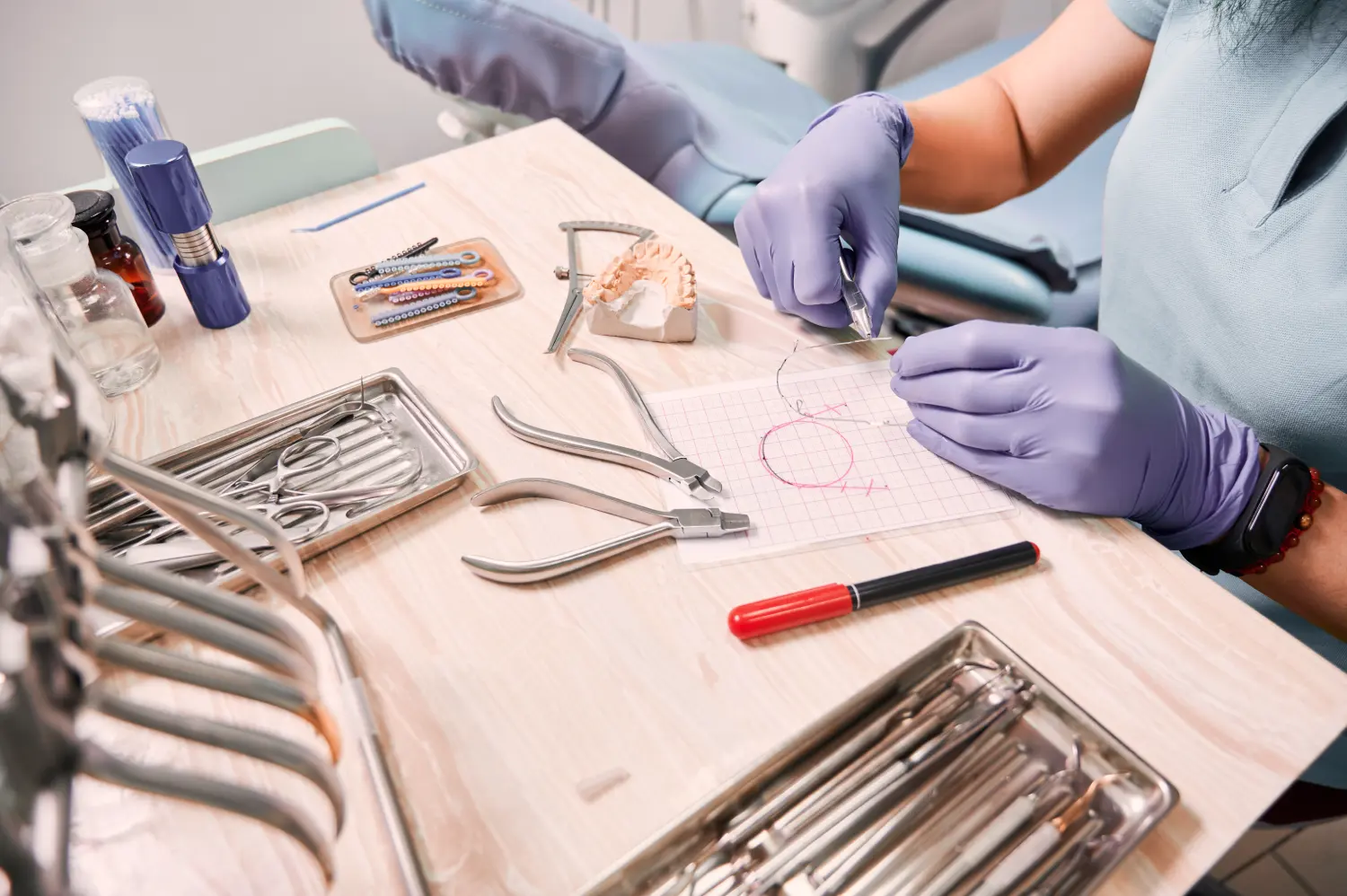
Getting a dental implant is not a single appointment. It is a process that happens in stages, allowing time for healing and ensuring the implant becomes stable and long-lasting. Here is what you can expect from start to finish.
Initial Consultation and Assessment
The process begins with a full dental assessment. Your dentist will examine your mouth, review your medical history, and take scans such as a CBCT or panoramic X-ray. These images help check your jawbone strength, the position of nerves, and whether any extra procedures like bone grafting, a sinus lift, or a tooth extraction are needed.
By the end of this visit, you will receive a clear treatment plan, including the expected timeline and a full breakdown of dental implant costs, so you know exactly what is involved before starting treatment.
At Zental, this stage is also focused on comfort and communication. If you feel nervous about dental treatment, sedation options and a calm environment are available to help you feel more at ease.
The Implant Placement Surgery
The implant is placed under local anesthetic, and sedation can be used if needed. The dentist makes a small cut in the gum, creates a precise space in the jawbone, and places the titanium implant. A healing cap is then fitted, and the gum is closed with stitches.
The procedure usually takes 1 to 2 hours per implant and is often described as more comfortable than a tooth extraction.
After this, the healing process begins as the bone gradually fuses with the implant over the next 3 to 6 months for the lower jaw, or up to 7 months for the upper jaw. If bone grafting is needed, this can extend the timeline.
Aftercare and Healing
The first few days are when swelling and discomfort are most noticeable. Ice packs, rest, and soft foods can help during this time. Most people start feeling more comfortable after 2 to 3 days and can return to a soft diet soon after.
During the healing phase, you will have follow-up visits so your dentist can check your progress. Once the implant has fully integrated with the bone, the abutment and custom-made crown are placed.
In total, the full process usually takes around 3 to 6 months for straightforward cases, and 6 to 12 months if additional procedures like bone grafting are needed.
A Long-Term Investment in Your Smile
Dental implants are one of the most complete and long-lasting ways to replace missing teeth. They restore your ability to eat comfortably, help protect jawbone health, and give you a natural-looking smile that feels like your own teeth again. With proper care, studies show that over 97% of implants are still successful after 10 years, and many can last 25 years or even a lifetime.
If you are thinking about dental implants, the most important first step is simply speaking to a qualified implant dentist. They can assess your situation and explain what is possible for you.
Ready to find out if dental implants are right for you? Book a consultation at your nearest Zental clinic and take the first step towards a healthier, more confident smile.
FAQ
Is a dental implant right for you?
Dental implants are suitable for most adults who are in good general health and have enough jawbone to support them. If the bone has reduced over time, bone grafting can often make treatment possible. A consultation with 3D scans is the best way to confirm if implants are right for you.
Who can have dental implants?
Most adults with fully developed jaws, healthy gums, and enough bone are good candidates. Well-controlled conditions like diabetes may still allow treatment, but they need careful planning. Smokers can also have implants, but the risk of failure is higher, so stopping smoking before and after treatment is strongly advised. Younger patients usually need to wait until jaw growth is complete.
What happens during dental implant treatment?
Treatment starts with a consultation and scans. The implant is then placed into the jaw under local anesthetic, with sedation available if needed. Over the next 3 to 6 months, the implant fuses with the bone in a process called osseointegration. Once healed, the connector and custom crown are fitted. The full process usually takes 3 to 9 months, depending on the case.
How long do dental implants last?
The implant itself can last a lifetime with good care. The crown on top usually lasts 10 to 20 years before it may need replacing due to normal wear. Studies show a 97% success rate at 10 years, and many patients keep their implants for decades.
Are dental implants safe?
Yes. Dental implants have been used safely for over 60 years and have a very strong success record. The global failure rate is around 3.1%, and long-term studies show success rates of about 97% after 10 years. Careful planning and good aftercare help reduce risks even further.
How much do dental implants cost in the UK?
A single implant usually costs between £1,800 and £4,500 in private clinics in the UK. Extra procedures like bone grafts or scans may increase the total cost. Many clinics also offer payment plans to spread the cost.
How do you care for dental implants long-term?
Brush twice a day with a soft toothbrush and clean between your teeth daily using floss or interdental brushes. Visit your dentist regularly for check-ups and professional cleaning. Avoid smoking and keep alcohol to a minimum, as both can affect gum health. While implants cannot get cavities, the gums around them still need careful care.


