


Zirconia implants are a metal-free alternative to traditional dental implants. Made from a strong ceramic material, they are designed to replace missing teeth while providing a natural-looking smile.
At our dental clinic, we've noticed that they have become increasingly popular among patients looking for an aesthetic tooth replacement, especially for visible front teeth.
In this guide, we'll explain how zirconia implants work, their benefits and risks, and what you can expect from treatment in the UK.
What Are Zirconia Dental Implants?
Zirconia dental implants are artificial tooth roots used to replace missing teeth. Like traditional dental implants, they are placed into the jawbone to support a crown, bridge, or denture. The main difference is that zirconia implants are made from a strong ceramic material called zirconium dioxide rather than titanium metal.
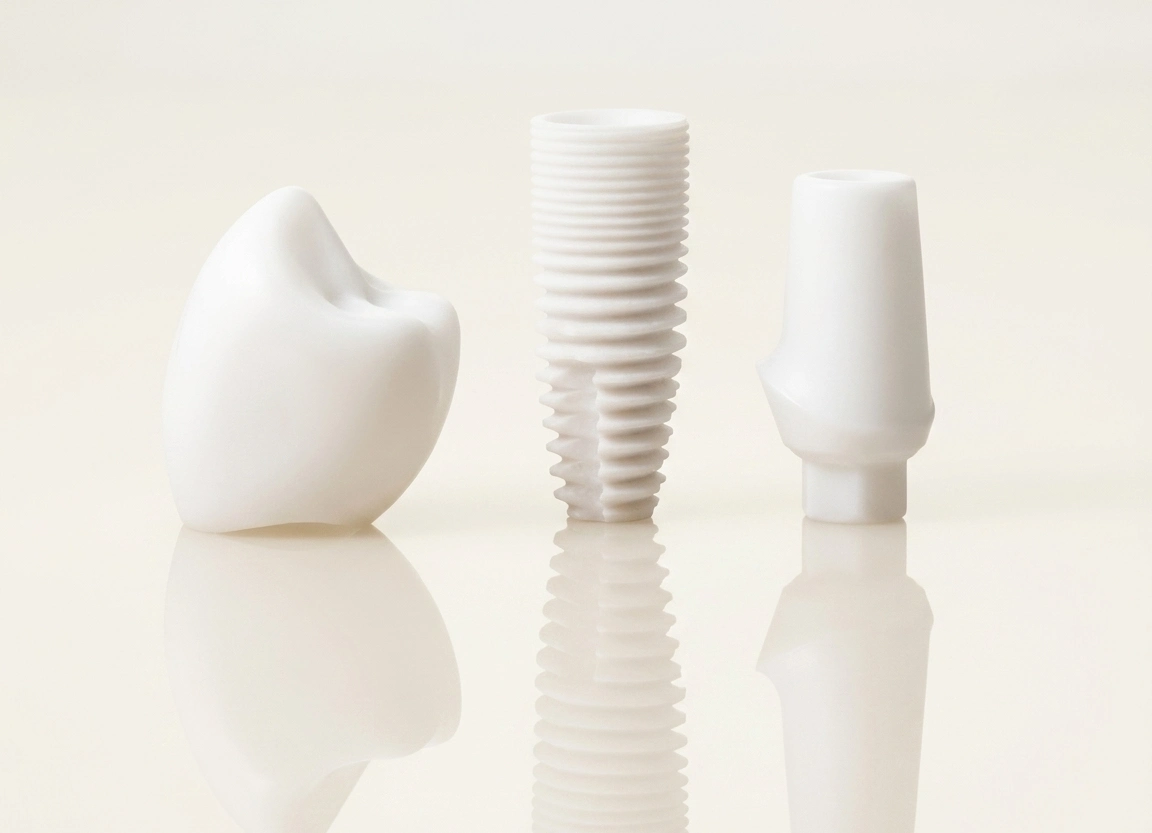
A zirconia implant consists of three main parts:
- The implant fixture: the part placed into the jawbone, acting as an artificial tooth root
- The abutment: the connector that attaches the replacement tooth to the implant
- The crown: the visible tooth that sits above the gum line
One of the main reasons patients choose zirconia implants is their natural appearance. Because the material is white rather than grey, it can blend more easily with surrounding teeth and gums, particularly in highly visible areas of the mouth.
In the UK, zirconia implants are typically available through private dental clinics. They work in much the same way as titanium implants, with the main difference being the ceramic material used.
What Are the Different Types of Zirconia Implant Systems?
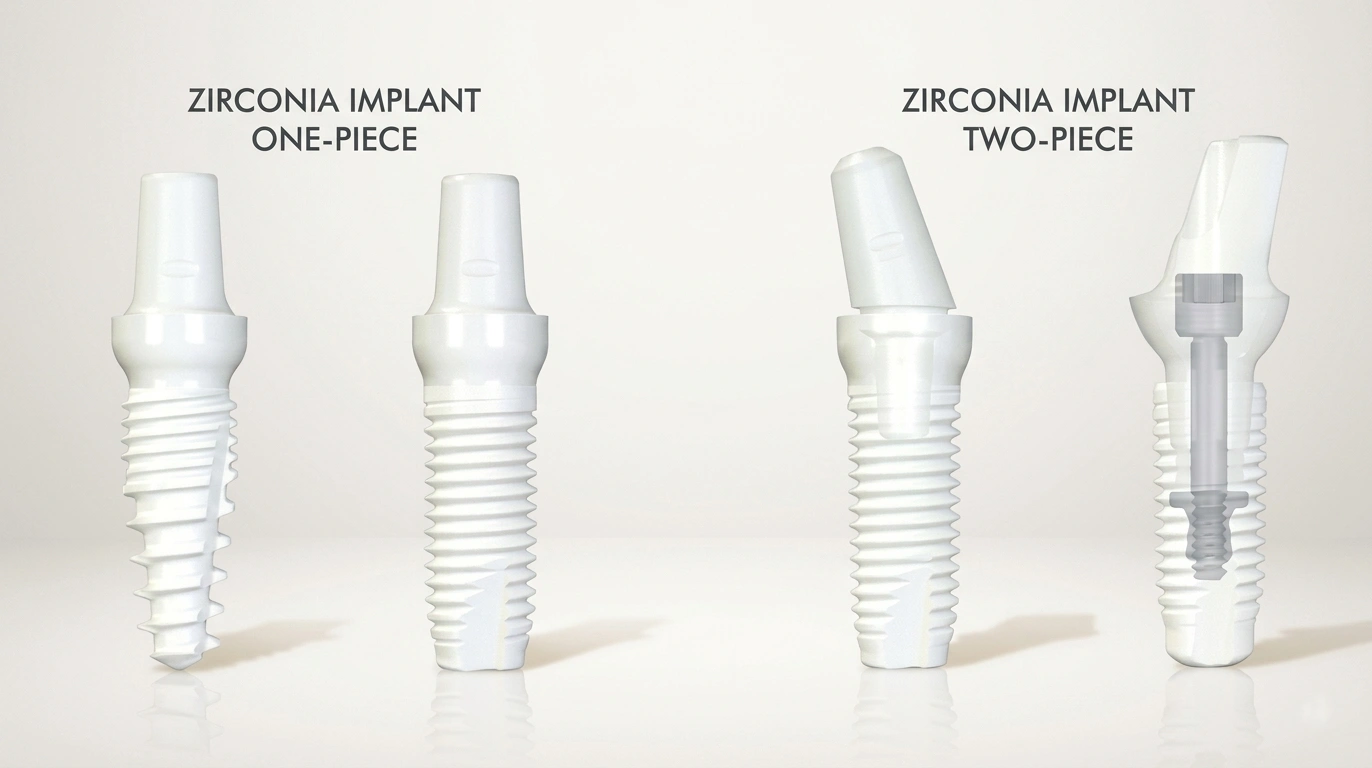
There are several types of dental implants available today, and zirconia implants come in two main designs: one-piece and two-piece systems. The right option depends on factors such as the location of the missing tooth, your bite, and your overall treatment plan.
One-Piece Systems
In a one-piece system, the implant and abutment are manufactured as a single unit. This design removes the connection between separate components and creates a simple structure.
One-piece zirconia implants are often used for straightforward cases, particularly when replacing a single tooth. However, because the implant and abutment are fixed together, there is less flexibility to adjust the angle of the final restoration after placement.
Two-Piece Systems
Two-piece systems consist of a separate implant and abutment, similar to many traditional implant designs. This gives dentists more flexibility when positioning and restoring the replacement tooth.
These systems can be useful in more complex cases where adjustments may be needed to achieve the best functional and aesthetic result.
Your dentist will recommend the most suitable zirconia implant system based on your individual needs, bone structure, and treatment goals.
How Does the Zirconia Dental Implant Procedure Work?
Getting zirconia implants usually involves several stages spread over a few months. While every treatment plan is different, the process generally follows these steps.
Step 1: Consultation and 3D Digital Planning
Your dentist will begin by examining your teeth, gums, and jawbone to determine whether zirconia implants are suitable for you. This usually includes a 3D CBCT scan, which provides a detailed view of your bone structure and helps plan the exact position of the implant.
Based on the results, your dentist will create a personalised treatment plan and discuss your options.
Step 2: Implant Placement into the Jawbone
The implant is placed into the jawbone under local anaesthetic. In some cases, a tooth extraction may be required beforehand if the damaged tooth is still in place. Sedation may also be available if you feel anxious about treatment.
Once the implant is in position, your dentist may place a healing cap or a temporary restoration, depending on your treatment plan.
Step 3: Healing and Bone Integration (Osseointegration)
After placement, the implant needs time to heal and integrate with the jawbone. This process, known as osseointegration, allows the implant to become stable and secure.
Healing times vary from patient to patient, but it typically takes several months before the final restoration can be fitted.
Step 4: Fitting the Final Crown or Restoration
Once healing is complete, your dentist will attach the final crown, which is custom-made to match the colour, shape, and size of your surrounding teeth. Patients who are also interested in improving the appearance of their smile may wish to combine implant treatment with other options such as dental veneers.
The result is a replacement tooth that looks natural, feels secure, and functions much like a natural tooth.
What Are the Key Benefits of Zirconia Dental Implants?
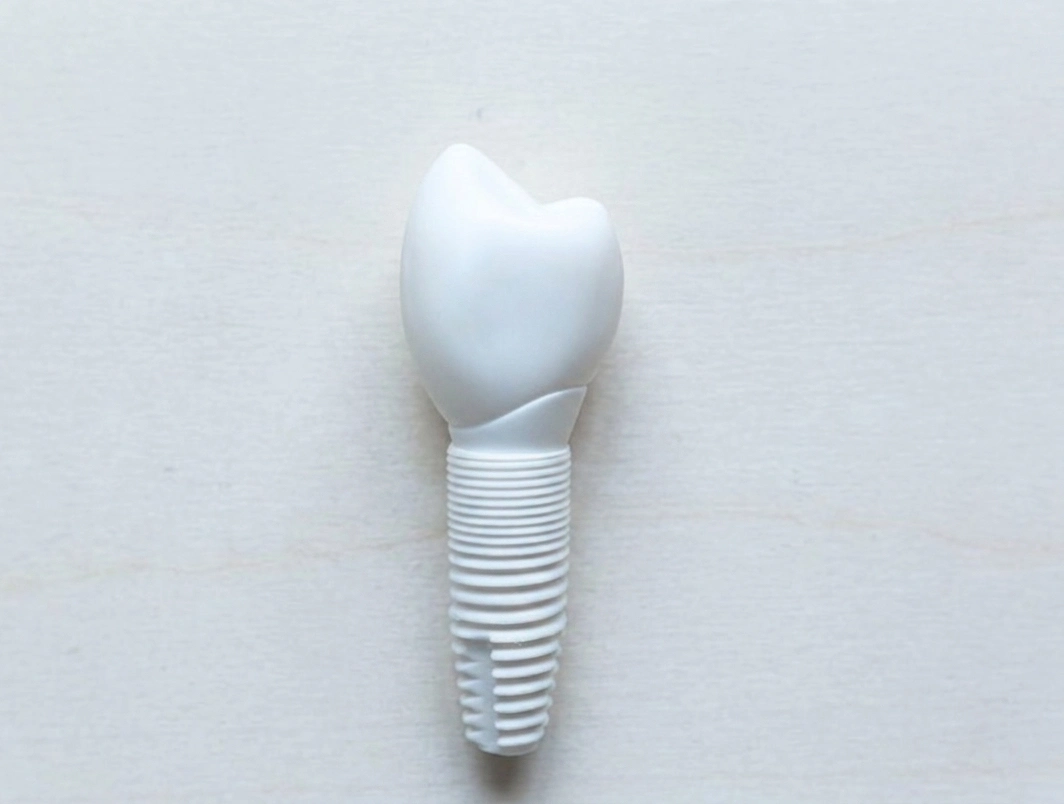
Zirconia implants have become increasingly popular because they offer both functional and aesthetic advantages. Here are some of the main benefits.
Metal-Free and Biocompatible Solution
One of the biggest advantages of zirconia implants is that they are completely metal-free. The ceramic material is highly biocompatible. This means it is well tolerated by the body and is safe alongside the surrounding bone and gum tissue.
Natural Tooth-Like Appearance With No Grey Line at the Gum
Unlike traditional metal implants, zirconia implants are white in colour. This can help create a more natural appearance, especially in patients with thin gums or when replacing highly visible front teeth.
Because there is no metal underneath, there is also less risk of a dark or grey line showing near the gum line.
Good Gum Health Response and Reduced Plaque Buildup
Zirconia has a smooth surface that may make it more difficult for plaque and bacteria to accumulate. This can help support healthy gums and reduce the risk of inflammation around the implant. Maintaining good dental hygiene is essential to getting the most from your implant and protecting the surrounding tissue long term.
Suitable Option for Patients With Metal Sensitivity
Some patients prefer to avoid metal dental restorations whenever possible. For these individuals, zirconia implants provide an alternative that is entirely ceramic while still offering strength and durability.
Aesthetic Advantages for Front Teeth Replacement
Zirconia implants are often chosen for front tooth replacement because of their natural appearance. Their tooth coloured material can blend well with surrounding teeth and help create a seamless smile. For patients for whom aesthetics is a priority, this can be a significant advantage.
What Are the Risks and Limitations of Zirconia Dental Implants?
Like any dental treatment, zirconia implants have advantages and limitations. Understanding the potential drawbacks can help you decide whether they are the right option for your needs.
- Less long-term clinical evidence: Zirconia implants have shown promising results, but they do not have the same long clinical history as titanium implants. Titanium has been used successfully for many decades, while zirconia is a newer option with less long-term research available.
- Risk of fracture: Zirconia is a very strong material, but it is also more brittle than titanium. In some cases, particularly where biting forces are high, there may be a greater risk of cracking or fracture.
- Limited flexibility in some cases: Certain zirconia implant systems, especially one-piece designs, offer less flexibility when it comes to adjusting the angle of the final restoration. This can make treatment planning more challenging in some situations.
- Not suitable for every patient: Zirconia implants may not be the best choice for everyone. Factors such as bone quality, bite forces, teeth grinding, and the complexity of the case can all influence which implant material is most suitable. Patients with untreated gum disease will need to have this resolved before implant treatment can begin.
- Importance of specialist assessment: The success of zirconia implants depends heavily on proper treatment planning and case selection. If you are wondering how to find the right dental implants specialist in the UK, look for an experienced implant dentist who can assess your oral health, discuss your goals, and recommend whether zirconia implants are the right option for you.
How Much Do Zirconia Dental Implants Cost in the UK?
In the UK, zirconia dental implants cost between £3,000 and £4,500 per tooth, although prices can vary between clinics. By comparison, a standard titanium implant often costs between £1,800 and £3,000 for a single tooth replacement.
Several factors can affect the final cost of zirconia implants:
- Clinic location: Dental clinics in London and other major cities often charge more than those in other parts of the UK.
- Implant system: Different zirconia implant brands vary in price.
- Additional procedures: Treatments such as bone grafting or sinus lift surgery can increase the overall cost.
- Dentist experience: Implant dentists with advanced training and extensive experience may charge higher fees.
Zirconia Implants vs Titanium Implants: Which Is Better?
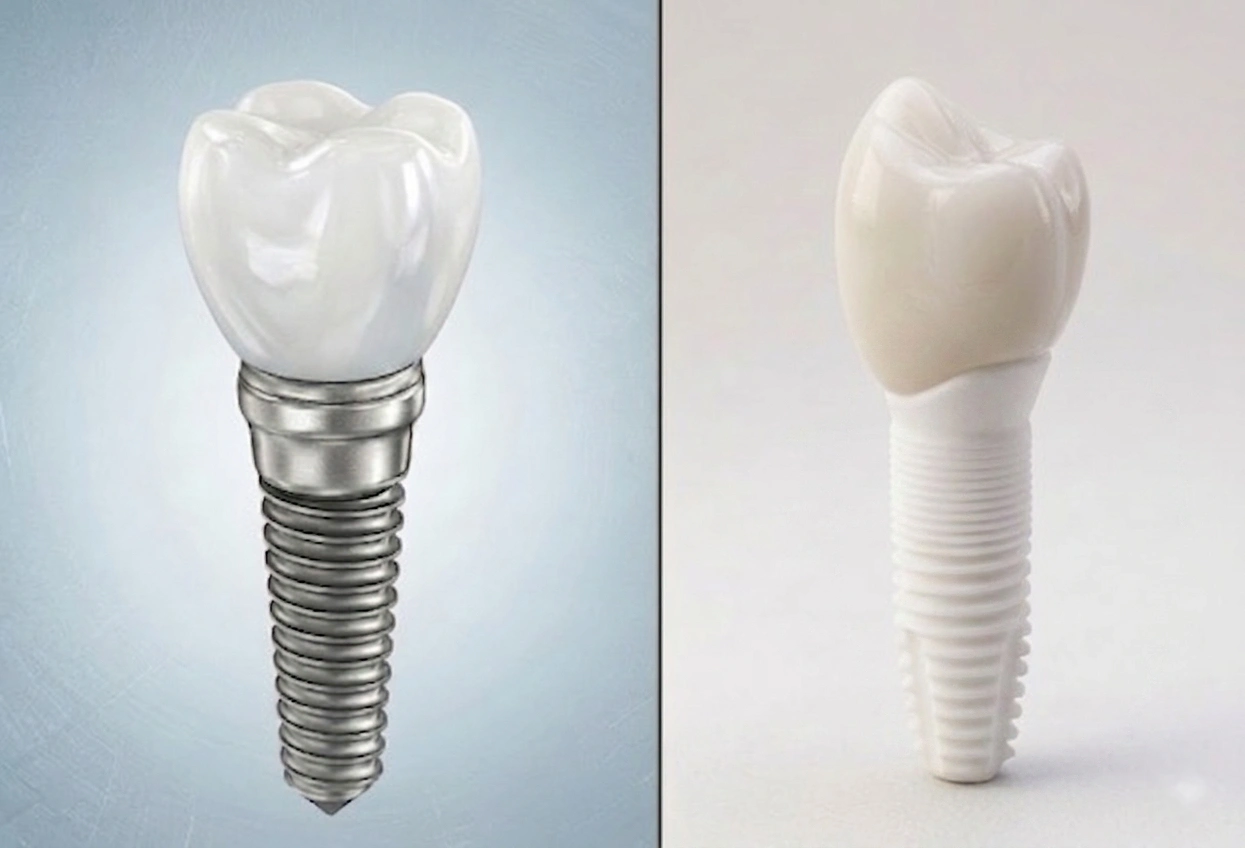
Neither zirconia nor titanium implants are automatically better than the other. The right choice depends on your oral health, treatment goals, and personal preferences.
Titanium implants remain the most commonly used option because of their long track record and versatility across a wide range of cases, including solutions such as All-on-4 and All-on-6 implants for full-arch restorations.
The best way to determine which implant material is right for you is through a consultation with an experienced implantologist who can assess your individual needs.
Who Is a Good Candidate for Zirconia Implants?
You may be a good candidate if you:
- Have a confirmed or suspected sensitivity to metal
- Need a front tooth replaced and want a natural-looking result
- Have thin gums where metal may be more visible
- Prefer a metal-free approach to dental treatment
- Have healthy gums and enough jawbone to support an implant
Zirconia implants may be less suitable if you:
- Grind or clench your teeth heavily
- Need multiple adjacent implants or a full arch restoration
- Have significant bone loss
- Require a complex or heavily angled implant placement
Where Can You Get Zirconia Dental Implants in the UK?
Zirconia implants are typically available through private dental clinics rather than the NHS. When choosing a provider, it is important to look for a dentist with experience in implant dentistry, access to advanced imaging technology, and a personalised approach to treatment planning.
You should also ask which implant systems the clinic uses and whether zirconia implants are suitable for your specific case.
At Zental, our implant dentists provide a range of dental implant treatments across London (Earl's Court, Knightsbridge, Cricklewood, Bexleyheath, Barnet) and Milton Keynes, including metal-free options where appropriate. Our team uses advanced 3D CBCT scans and digital treatment planning to create personalised treatment plans for each patient, taking into account their oral health, treatment goals, and long-term needs to achieve the best possible outcome. If you are considering zirconia implants, booking a consultation is the best way to find out whether they are the right choice for you.
Ready to find out whether zirconia is right for you? Book a consultation at Zental, and let us guide you through every step.
FAQ
Are zirconia implants safe?
Yes. Zirconia implants are made from a strong ceramic material that is widely used in dentistry and is well tolerated by the body. When placed by an experienced implant dentist, they are considered a safe and effective option for replacing missing teeth.
How long do zirconia implants last?
With proper care and regular dental check-ups, zirconia implants can last for many years. Their lifespan depends on factors such as oral hygiene, overall health, bite forces, and the quality of the implant placement.
Are zirconia implants better than titanium?
Neither option is better for every patient. Zirconia implants are often chosen for their natural appearance and metal-free design, while titanium implants are known for their long clinical history and suitability for a wide range of cases. Your dentist can help determine which option is best for you.
Do zirconia implants look more natural?
Yes, many patients choose zirconia implants because of their tooth-coloured appearance. This can create a more natural-looking result, particularly when replacing front teeth or in patients with thin gum tissue.
Can zirconia implants be used for multiple-tooth or full-mouth restorations?
Zirconia implants can be used for single tooth replacement and some smaller restorations. However, titanium implants are often preferred for complex treatments, such as full-arch or full-mouth restorations. Your dentist will recommend the most suitable option based on your needs.
Who are zirconia implants best suited for?
Zirconia implants may be suitable for patients who want a metal-free solution, have aesthetic concerns, or need a front tooth replaced. Good candidates should also have healthy gums and enough jawbone to support the implant.
What are zirconia implants made of?
Zirconia implants are made from zirconium dioxide, a durable ceramic material. Unlike titanium implants, they are completely metal-free while still providing the strength needed to support replacement teeth.


