


An underbite is a common dental problem where the lower teeth sit in front of the upper teeth. It affects around 5 to 10% of people, but many are not sure what it means or how it can be treated.
You might first notice it when looking in the mirror, especially if your lower jaw seems to sit further forward than it should. Parents may also spot it in their child if the bite does not look quite right as the jaw develops.
In this article, we will walk you through what causes an underbite, the signs to look out for, the different types, and the treatment options available. The good news is that an underbite can be treated at any age, and it all starts with understanding the problem.
What is an Underbite?
In a healthy bite, your upper front teeth sit slightly in front of your lower front teeth. With an underbite, this is the other way around. The lower jaw moves forward, so the bottom teeth sit in front of or overlap the upper teeth. Dentists call this a Class III malocclusion.
An underbite happens when the lower jaw grows further forward than the upper jaw. In some people, it is very mild and not easy to notice. In others, it is more obvious, with a clear gap between the upper and lower teeth even when the mouth is closed.
It is also helpful to know that a small overbite is normal, and many patients look into treatment options to fix overbite issues when the overlap is too large. An underbite, however, is not considered a normal bite, even if it looks mild.
What are the Types of Underbite?
Not all underbites are the same, and the type you have plays a big role in which treatment will work best for you.
Dental Underbite
A dental underbite is all about tooth positioning. The jawbones themselves are the right size and in the right place, but the teeth have grown in at unusual angles, pushing the lower teeth ahead of the upper ones. This type tends to respond well to orthodontic treatments like braces or Invisalign, since the correction only involves moving teeth rather than reshaping bone.
Skeletal Underbite
A skeletal underbite is a structural issue. Here, the lower jaw (the mandible) has grown too large, or the upper jaw (the maxilla) has not developed enough. The difference is usually visible in the face, with the chin and lower lip appearing more prominent in profile, and can contribute to facial asymmetry. In adults, correcting a skeletal underbite often involves surgical intervention alongside orthodontics.
Some people have a combination of both, which is something your orthodontist will assess during a consultation.
What Are the Causes and Symptoms of an Underbite?
The most common cause of an underbite is genetics. The way your jaw grows, along with the size and shape of your teeth, is often passed down from your parents. If someone in your family has an underbite, you are more likely to have one too.
Childhood habits can also play a role. Thumb sucking, using a dummy for too long, tongue pushing against the teeth, or long-term bottle feeding can slowly affect how the jaw develops.
In some cases, injuries to the jaw or uneven growth between the upper and lower jaw can also lead to an underbite.
Symptoms of Underbite to Watch For
The most obvious sign is seeing your lower teeth in front of your upper teeth when you close your mouth. But an underbite can show up in ways you might not immediately connect to your bite:
- Difficulty biting into or chewing food properly
- Trouble pronouncing certain sounds, particularly "f" and "s."
- Jaw pain, soreness, or muscle fatigue
- Clicking, popping, or locking in the jaw joint (the TMJ)
- Recurring headaches or earaches
- Noticeable wear on your lower front teeth
- Breathing through the mouth more than the nose
- Snoring or disrupted sleep
- A chin that appears to jut forward, changing your facial profile
- Bad breath is linked to mouth breathing and difficulty keeping teeth clean
How to Fix an Underbite: Dental, Orthodontic, and Surgical Options
The right treatment for an underbite depends on your age, how severe it is, and whether the problem is in the teeth or the jaw. Below are the main options.
How to Fix an Underbite with Braces
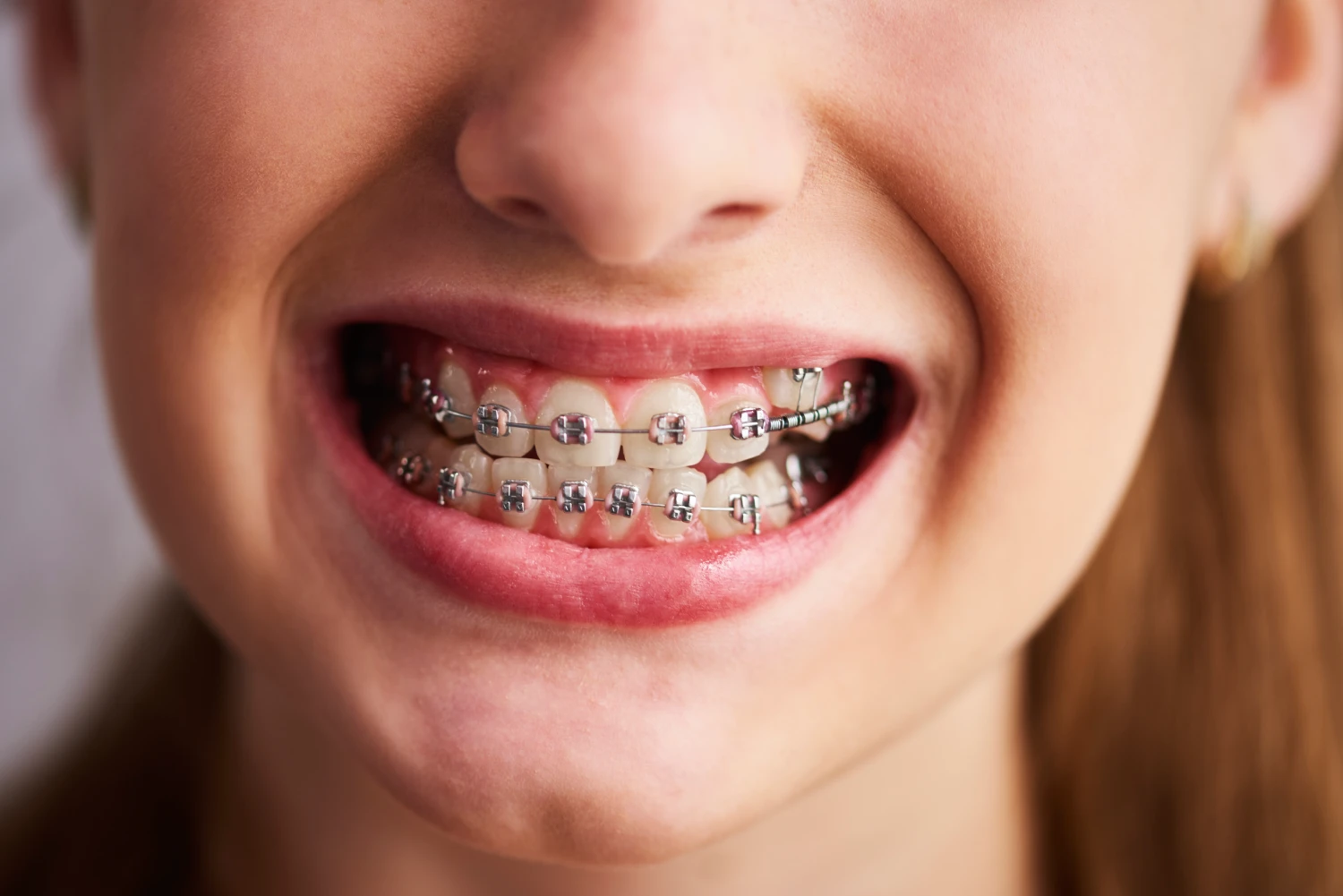
Braces are one of the most common ways to treat mild to moderate underbites, especially when the issue is with the teeth. They use brackets and wires to gently move teeth into the right position over time.
In some cases, braces can also help guide the bite and jaw position by using elastics (rubber bands). These apply extra pressure between the upper and lower teeth, helping bring the jaws into better alignment as the teeth move.
You can choose from a few different types of braces depending on your needs and how discreet you want them to be. Traditional metal braces are the most common option. They are strong, reliable, and often the best choice for more complex cases.
If you want something less noticeable, ceramic or clear braces work in the same way but use tooth coloured brackets, so they blend in better with your smile. Lingual braces are the most discreet option, as they are placed on the back of your teeth, making them almost invisible from the front.
Treatment usually takes 18 to 24 months, and braces can also be used before or after surgery to improve the final result.
How to Fix an Underbite with Invisalign
Invisalign is a more discreet option that uses clear, removable trays to move your teeth. You wear them most of the day and only take them out to eat, drink, and brush.
It works best for mild to moderate underbites and is popular with adults who want a less visible option. For more severe cases, it may need to be combined with other treatments.
How an Upper Jaw Expander Fixes an Underbite
An upper jaw expander is used to widen the upper jaw so it lines up better with the lower jaw. It is slowly adjusted over time, which creates space and helps guide the teeth into the right position. This treatment works best for children, as their jaws are still growing and easier to shape. It is often used together with braces as part of early treatment to avoid more complex problems later on.
How Jaw Surgery Fixes an Underbite
For more severe underbites caused by the jaw, surgery may be needed. This involves moving the upper jaw, lower jaw, or both into a more balanced position. Patients usually wear braces before and after surgery to prepare the teeth and improve their final result. Along with improving the bite, surgery can also help with chewing, jaw pain, and breathing issues.
How Reverse-Pull Headgear Fixes an Underbite
Reverse pull headgear is mainly used for children whose upper jaw needs help growing forward. It gently pulls the upper jaw into a better position over time. It needs to be worn for many hours each day and is often combined with expanders or braces. Because it relies on growth, it is not suitable for adults.
Tooth Extraction as a Solution for an Underbite
In some cases, an underbite is made worse by crowding in the lower jaw. Tooth extraction can create space and help the remaining teeth move into better alignment. This is usually combined with braces or aligners rather than used on its own. Your orthodontist will decide if this is the right approach based on your specific case.
How Underbite Treatment Differs for Children vs. Adults
The way an underbite is treated depends a lot on age. This is because the jaw is still growing in children, which gives more flexibility, while in adults, the jaw has fully developed and is harder to change without surgery.
Children (ages 7 to 12)
This is the ideal time to treat an underbite. The jaw bones are still soft, so orthodontists can guide how they grow and often correct the problem early. Many experts recommend a first orthodontic check by age 7, as treatment at this stage can reduce the need for more complex procedures later.
Common treatments include upper jaw expanders, reverse pull headgear, chin cups, and early braces. These work by guiding the jaw into a better position as the child grows. Starting early can also shorten overall treatment time and improve long-term results.
Teenagers (ages 13 to 17)
During the teenage years, most of the jaw growth has already happened, but some changes are still possible. Braces are usually the main treatment at this stage, often combined with elastics to improve how the upper and lower teeth fit together.
In younger teens, expanders may still be used if needed. However, if the underbite is more severe, treatment may be planned in stages, with surgery considered later once growth is complete.
Adults (18 and older)
By adulthood, the jaw bones are fully set, so treatment focuses on moving the teeth or correcting the jaw position. Braces or Invisalign can still work very well for mild to moderate cases where the issue is mainly dental.
For more severe underbites caused by the jaw, surgery may be needed to achieve a stable and long-lasting result. This is usually combined with orthodontic treatment, where braces are used to align the teeth and improve the bite before and after the procedure.
There is no upper age limit for treatment. Many adults choose to fix an underbite later in life, and results can be just as effective, even for people in their 40s or 50s.
Why is Correcting an Underbite Important?
An underbite is not just about how your teeth look. It can affect your health and your day-to-day comfort in several ways.
When your teeth are not aligned properly, they are harder to clean, which can increase the risk of cavities and gum problems over time. At the same time, an uneven bite puts extra pressure on your jaw muscles and joints, which can lead to pain, tension, or clicking in the jaw.
An underbite can also cause uneven wear on your teeth. Over time, this can weaken the enamel and increase the risk of chipping or damage. It may also make chewing less effective and affect how clearly you speak, especially certain sounds.
There is also a confidence side to it. Many people feel more comfortable speaking, smiling, and being in photos after their bite has been corrected.
It is also important to know that underbites do not usually fix themselves. Starting treatment earlier gives you more options and can make the process simpler.
What are the Complications of an Untreated Underbite?
Leaving an underbite untreated does not just keep things as they are. Over time, the problems tend to get worse.
Jaw and Joint Pain (TMJ)
A misaligned jaw puts constant strain on the temporomandibular joint. This can lead to TMJ disorder, causing jaw pain, locking, clicking or popping, headaches, earaches, and even dizziness. Studies show that around 43% of people with bite issues experience TMJ symptoms.
Irreversible Tooth Damage
When your teeth meet at unnatural angles, the enamel wears down faster than it should. Enamel does not grow back, so once it is gone, your teeth become more sensitive and more at risk of cavities, chipping, or fracturing. This can lead to needing crowns, bridges, or other restorative treatments that could have been avoided if the underbite had been corrected earlier.
Gum Disease and Tooth Decay
Misaligned teeth create tight spaces and awkward angles that are hard to clean properly. Bacteria build up in these areas, increasing the risk of gum disease and infections. Research has also linked poor oral health to wider health problems, including cardiovascular issues.
Speech and Breathing Issues
An underbite can make it hard to pronounce certain sounds, especially "f" and "s". It can also narrow the airway slightly, causing mouth breathing, snoring, or even obstructive sleep apnea. Poor sleep quality from sleep apnea can affect your energy, concentration, mood, and long-term mental health.
Facial and Psychological Impact
Over time, the chin can become more prominent, and facial proportions can shift. For children, an untreated underbite can increase the risk of bullying, which may affect confidence and mental health through adolescence and into adulthood. Adults often feel self-conscious about their profile, which can impact social and professional interactions.
When to Seek Professional Help for Treating the Underbite
Underbites do not fix themselves, so waiting and hoping rarely helps. For children, it is best to have an orthodontic check-up by age 7, as part of children's dentistry, since early treatment can make a big difference. Adults can also benefit from treatment at any age, and there is no need to live with jaw pain, difficulty chewing, or self-consciousness about your bite.
You should consider booking a consultation if you notice any of the following:
- Your lower teeth stick out in front of your upper teeth
- You have jaw pain, clicking, or limited jaw movement
- Chewing or speaking clearly has become hard
- You have recurring headaches or earaches with no other cause
- A child is feeling self-conscious about their smile or is being bullied
If you or your child shows any of these signs, Zental’s specialist orthodontic team can help. Our clinics across London (Earls Court, Knightsbridge, Cricklewood, Bexleyheath, Barnet) and Milton Keynes offer a full range of underbite treatments, including Invisalign clear aligners, ceramic or metal braces, and Incognito lingual braces hidden behind your teeth.
All Zental orthodontists hold GDC Specialist registration and are trained at top institutions. Finance options start from 0% interest over 12 months, with plans available up to 60 months at 9.9% APR, making treatment manageable for most patients.
FAQ
Can an underbite be fixed without surgery?
Yes. Mild to moderate underbites are frequently corrected with braces, Invisalign, jaw expanders, or headgear. Surgery is typically reserved for severe skeletal underbites in adults. Starting treatment in childhood gives the best chance of avoiding surgery altogether.
What causes an underbite?
Genetics is the most common cause. Other contributing factors include childhood habits like thumb-sucking and tongue thrusting, jaw injuries that did not heal properly, tumours affecting the jawbone, and the upper and lower jaws growing at uneven rates.
Why should I fix my underbite?
Beyond appearance, an underbite affects your ability to chew and speak clearly. It increases your risk of TMJ disorder, enamel erosion, gum disease, and sleep apnea. Correcting it improves oral health, comfort, and confidence in your daily life.
When is the best age to treat an underbite?
The ideal window is between ages 7 and 10, when the jaw bones are still growing and can be guided into better alignment. Adults can still be treated very effectively, though skeletal corrections may require surgery. The American Association of Orthodontists recommends a first evaluation at age 7.
Can an underbite be fixed naturally?
No. Underbites do not resolve on their own. Stopping habits like thumb-sucking or tongue thrusting can prevent an underbite from getting worse, but professional orthodontic or surgical treatment is needed to correct the misalignment.


