


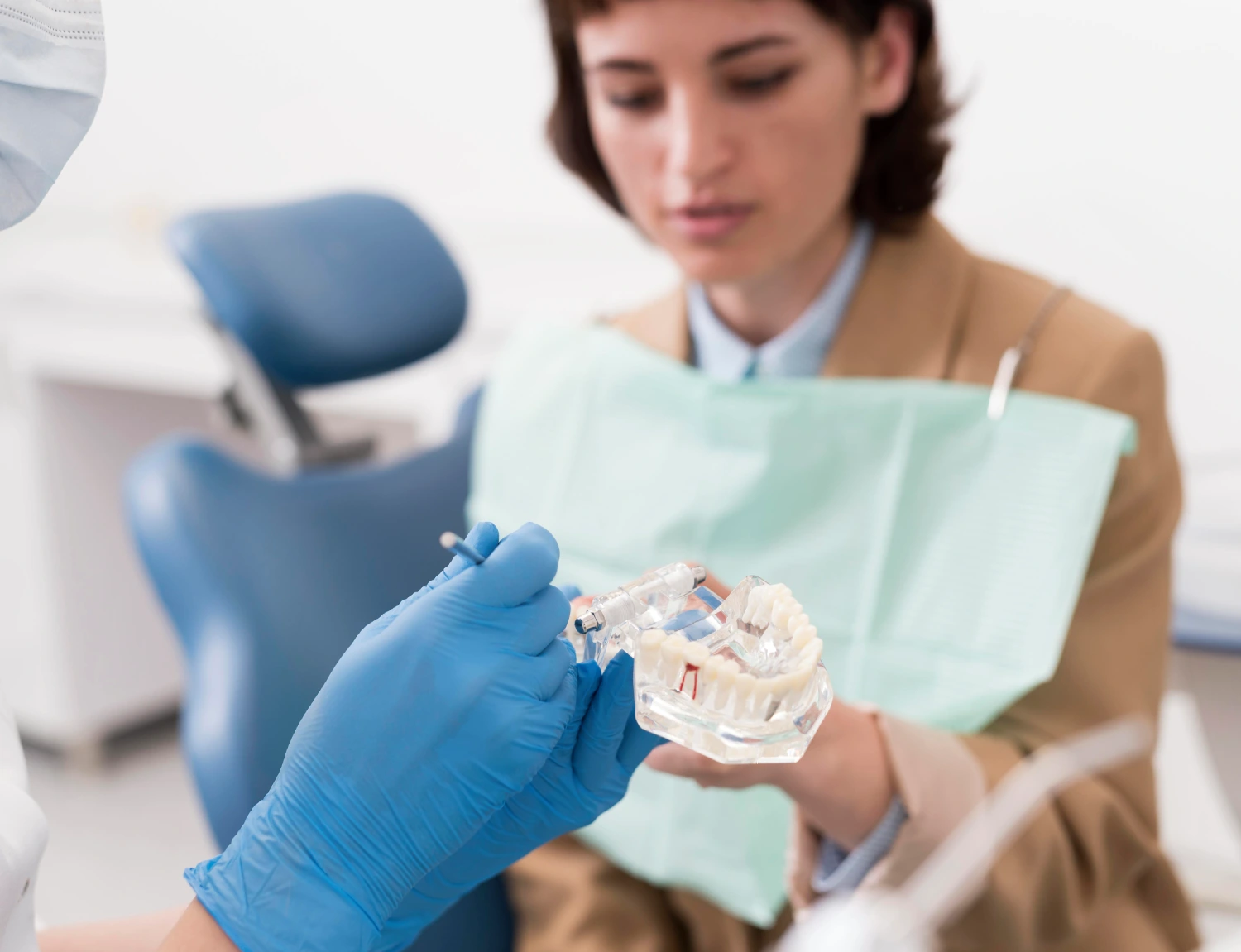
Losing a tooth affects more than just your smile. It can change how you eat, speak, and feel on a daily basis. If you’re here, you’re likely trying to decide between dental implants and dentures.
In our dental clinic, we’ve seen many patients face this exact decision. Most people come in unsure about which option will suit them best, especially when it comes to comfort, cost, and long-term results.
You’re not alone. Many people in the UK are in the same position, and both treatments have improved a lot in recent years. The right choice really depends on your needs, your health, and your budget.
In this guide, we’ll explain how each option works, what they cost in the UK, and how to choose the best fit for you.
What Are Dental Implants?
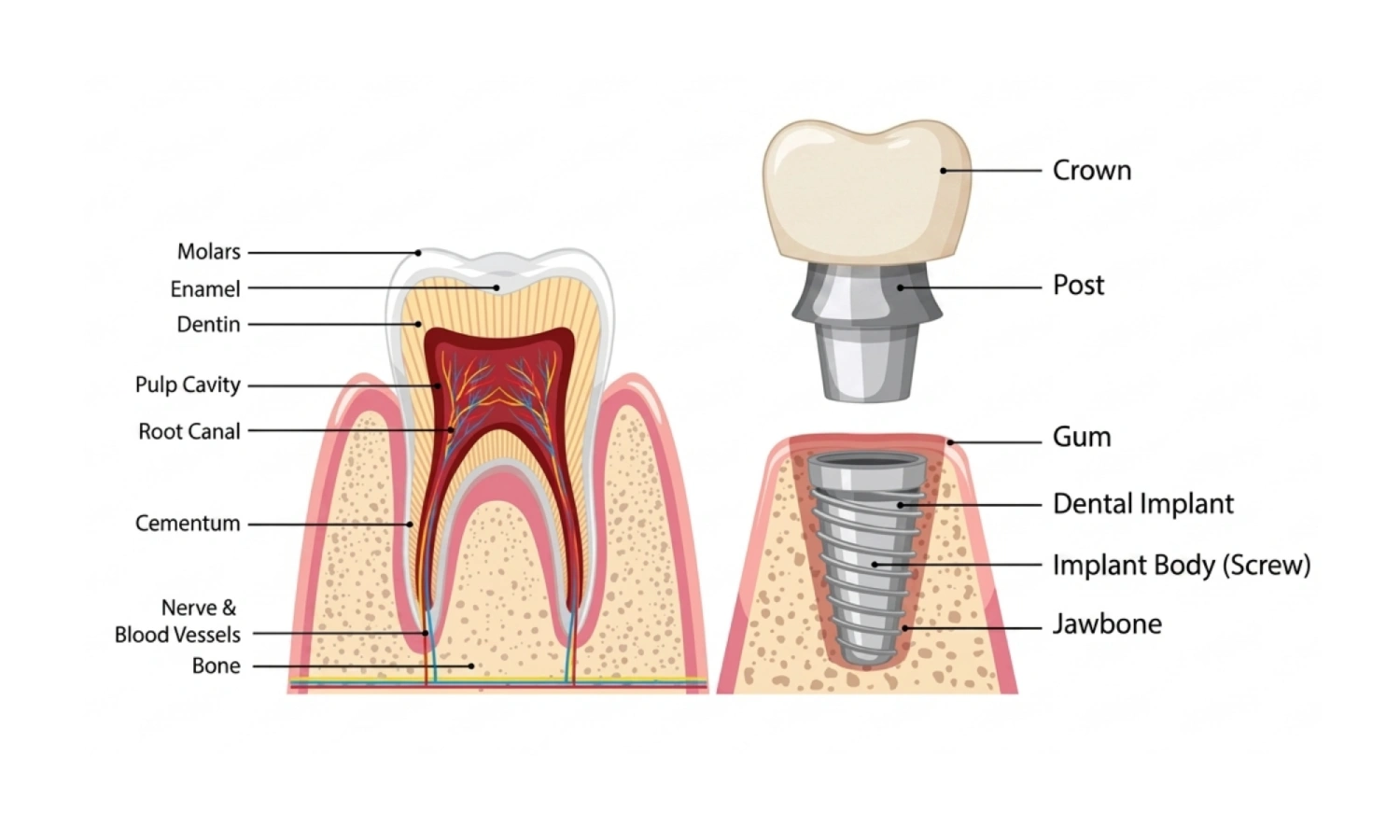
A dental implant is a small titanium post that a dentist places into your jawbone. Dental implants work like artificial tooth roots. Once it is in place, the bone slowly grows around it and holds it firmly in position. This process is called osseointegration, which simply means the bone and implant naturally bond together over time.
This healing stage usually takes around three to six months. After that, a small connector called an abutment is attached, and a custom-made crown is fitted on top. The final result looks and feels like a natural tooth, and you can use it in the same way when eating and speaking.
In our dental clinic, we’ve seen how much implant treatment has improved in recent years. Modern planning tools such as digital impression, 3D, X-rays and CT scans help dentists place implants with much greater accuracy than before. For patients replacing a full set of teeth, systems like All-on-4 can even provide fixed temporary teeth within 24 hours of surgery.
Dental implants are now a well-established treatment used worldwide, with millions placed every year. For many patients, the results can be truly life-changing, restoring both confidence and everyday function. Dental implant before-and-after results are often remarkable, showing significant improvements in both smile aesthetics and oral health.
Pros and Cons of Dental Implants
Pros:
- Look, feel, and function like your own teeth
- Preserve your jawbone completely (they stimulate the bone just like natural roots)
- Designed to last 20 to 30+ years with proper care, with 5-year success rates of 95 to 98%
- Restore close to 100% of your natural bite force
- No removal needed; you brush and floss them like real teeth
- 90% of patients report excellent satisfaction
Cons:
- Requires surgery and a healing period of three to six months
- Higher upfront cost: £1,800 to £5,500 per tooth privately in the UK
- Not available on the NHS except in rare medical cases
- Requires sufficient jawbone density (bone grafting can help if yours is low)
- Not suitable for patients with uncontrolled systemic health conditions
At Zental, the price for a single-tooth dental implant starts at £995.
What Are Dentures?
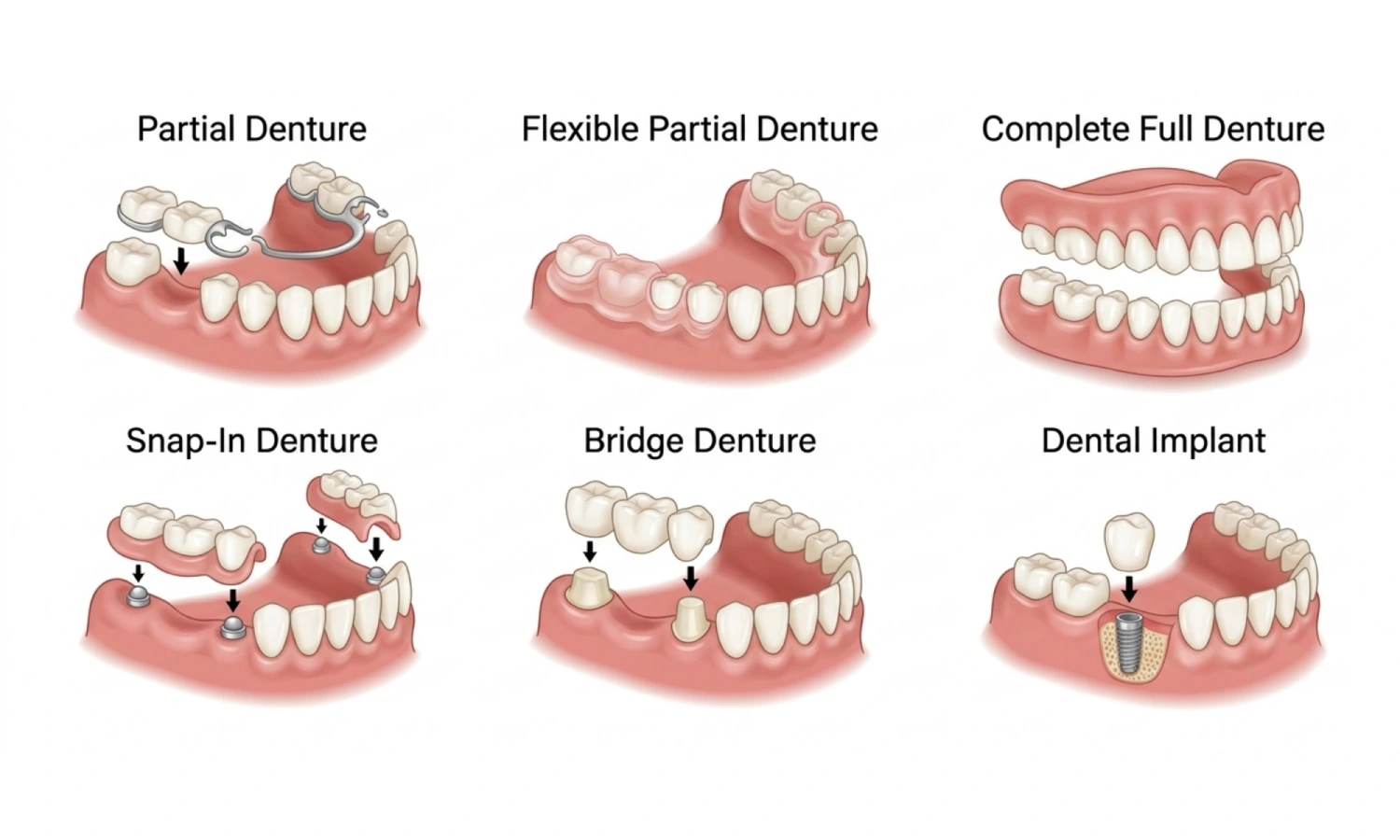
Dentures are removable false teeth that replace missing teeth and some of the surrounding gum. They are made to sit on your gums and help restore your smile, as well as your ability to eat and speak more comfortably.
There are two main types. Full dentures replace all the teeth in the upper or lower jaw. Partial dentures are used when you still have some natural teeth and only need to fill in the gaps.
Dentures can be made from different materials, including acrylic (a type of plastic), metal-based frames, or more flexible modern materials that shape more closely to your gums.
Modern dentures are also much better than older versions. They now look more natural and feel more comfortable, which is why many people are surprised by how much they have improved in recent years.
Pros and Cons of Dentures
Pros:
- Lower upfront cost
- No surgery required
- Can be fitted even with low bone density
- Faster treatment timeline
- Suitable for most ages and health conditions
Cons:
- Restores only 20 to 25% of natural bite force
- Can slip, click, or require adhesive
- Many people report some level of discomfort or functional limitation
- Must be removed nightly and soaked in cleaning solution
- Need replacing every 5 to 10 years
- Can contribute to a sunken facial appearance over time as the jawbone shrinks
Dental Implants vs Dentures: Key Differences
Both options solve the same core problem, but they work in very different ways. Here's a side-by-side look at how they compare across the factors that matter most:
Dental Implants vs Dentures: Which One Feels More Like Your Own Teeth?
This is one of the most common questions, and the difference is quite clear.
Dental implants are fixed in your jaw, so they don’t move. Because they act like natural tooth roots, they restore almost full biting strength. Most people find they can eat normally again and often stop noticing their implant when speaking or chewing.
Dentures work differently. They sit on top of your gums and are removable. Because of this, they usually restore less biting strength, and some people remain aware of them during daily activities like eating or talking.
If you want something in between, there is also an option called implant-supported dentures. These attach to a small number of implants for extra stability, but can still be removed for cleaning. They feel much more secure than traditional dentures and improve chewing ability significantly.
Dental Implants vs Dentures: Which Lasts Longer?
Dental implants are designed to last a very long time. With good oral hygiene and regular dental visits, they can last 20 years or more and, in many cases, a lifetime.
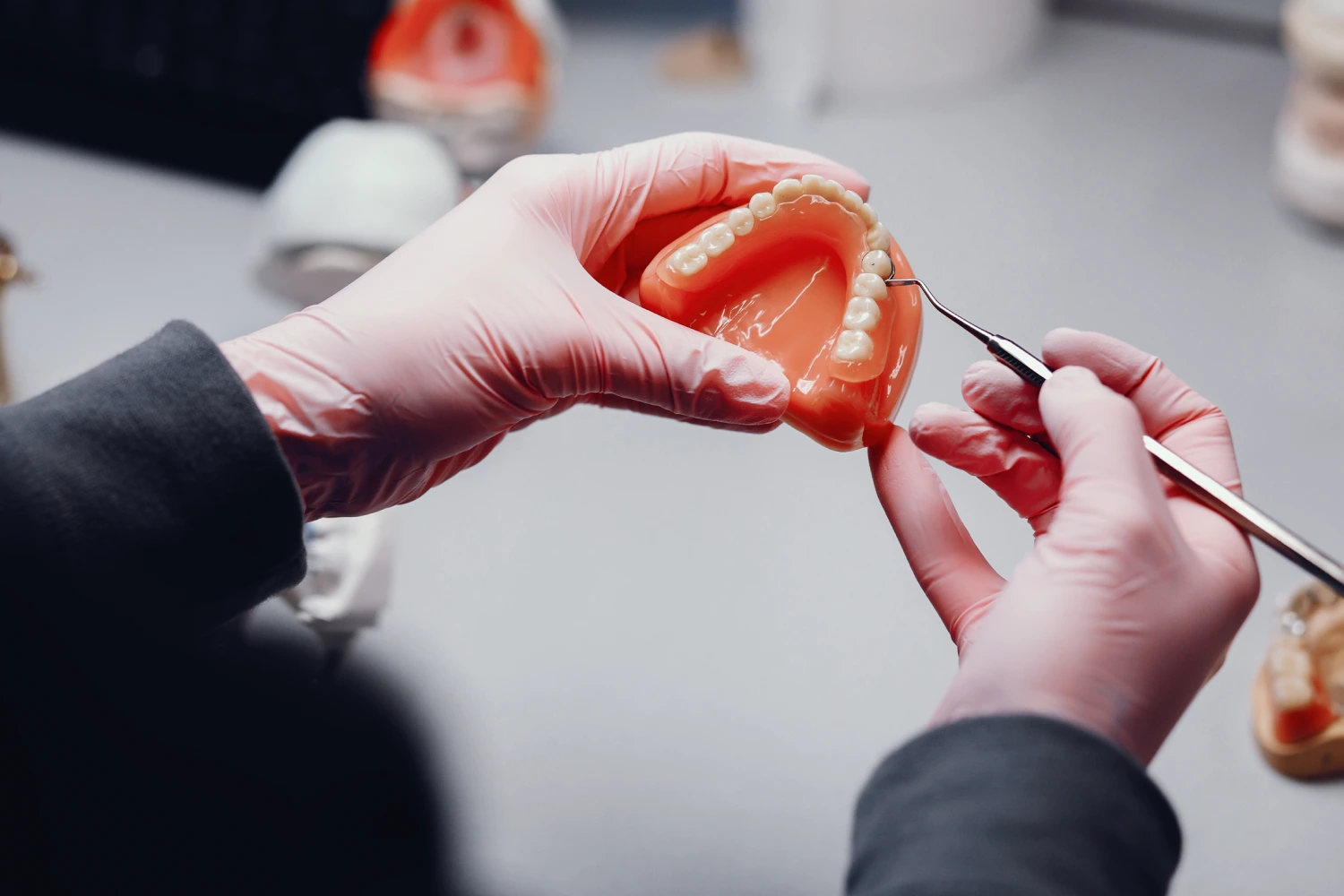
Dentures have a shorter lifespan. Most need to be replaced every 5 to 7 years because the shape of your gums and jaw changes over time. This means they may also need adjustments or relining to keep them fitting properly.
Because of this, implants can be more cost-effective in the long run, even though the upfront cost is higher.
Dental Implants vs Dentures: Which Is Easier to Maintain?
Implants are usually easier to care for day to day. You simply brush and floss them like natural teeth and attend regular dental check-ups.
Dentures need a bit more routine. They must be removed at night, cleaned separately, and soaked in a cleaning solution. Some people also use adhesive to help keep them secure during the day, and they may need adjustments over time as the mouth changes.
In our dental clinic, we often find that patients who prefer simplicity and a “natural teeth” feeling tend to lean towards implants, while those looking for a non-surgical and more flexible option often choose dentures.
Cost Comparison: Dental Implants vs Dentures in the UK
Let’s talk about the costs of dental implants and dentures in the UK, because this is often the biggest factor when people are deciding between implants and dentures.
Before looking at prices, it helps to understand the main types of dental implants and dentures, since the treatment you need will affect the overall cost.
For dental implants, the most common options include single dental implants, All-on-4 implants, All-on-6 implants, and more complex treatments such as subperiosteal implants, zygomatic or pterygoid implants for cases with low bone density.
For dentures, the main types include partial acrylic dentures, full acrylic dentures, chrome (metal-based) dentures, flexible dentures, and implant-retained dentures, which offer more stability by attaching to dental implants.
Private treatment prices in the UK can vary depending on the clinic, the complexity of your case, and the materials used. However, we can still look at typical ranges to help you understand what to expect.
Dentures are generally more affordable upfront, with prices depending on the type and materials used.
Who Is the Right Candidate for Dental Implants?
Not everyone can have dental implants straight away, but more people are suitable than many expect.
In our dental clinic, we’ve seen that most patients who are interested in implants can usually become good candidates after some simple preparation, if needed.
In general, you may be suitable if you have:
- Healthy gums with no active gum disease (this can often be treated first if needed).
- Enough jawbone to support the implant (and if not, bone grafting or other procedures can often help rebuild it).
- Good general health that allows for minor oral surgery.
- Well-controlled medical conditions, such as diabetes, where healing is not affected.
- A willingness to stop or reduce smoking, as it can slow healing.
- A commitment to keeping your teeth and gums clean after treatment.
One thing that often surprises people is that age is not a barrier. Patients in their 70s and 80s can and do receive dental implants successfully. What matters most is your overall health and bone quality, not your age.
Even if you don’t meet all the criteria right away, there are often treatment options that can help prepare you for implants in the future.
Who Is the Right Candidate for Dentures?
Dentures are still a very good option for many people, and they remain one of the most commonly used ways to replace missing teeth in the UK.
In our dental clinic, we often see patients choose dentures because they want a simple, non-surgical solution that works quickly and is more affordable upfront.
Dentures may be the better choice if you:
- Have significant bone loss that cannot support implants, even with grafting
- Prefer a faster treatment with no surgery involved
- Are you working within a smaller budget, or do you want to keep initial costs low
- Have health conditions that make surgery less suitable
- Would rather avoid a long healing period after treatment
- Need several or all teeth replaced and want a quick way to restore function
It’s also important to know that modern dentures are much improved compared to older versions. They are now lighter, more comfortable, and more natural-looking.
There are also different types available today. For example, metal-based (chrome) dentures are thinner and stronger, flexible dentures adapt better to the gums, and implant-retained dentures offer extra stability by attaching to dental implants.
Wrapping Up
There isn’t a single right answer when choosing between dental implants and dentures. Both can replace missing teeth effectively, but they work in different ways and suit different needs.
Dental implants are more durable and feel closer to natural teeth. They also help protect the jawbone and can last many years. However, they do involve surgery and a higher upfront cost.
Dentures are more affordable and do not require surgery, which makes them a good option for many people. On the other hand, they usually need replacing or adjusting over time and require a bit more daily care.
The best choice depends on your health, your bone strength, your budget, and what feels most comfortable for your day-to-day life.
The most useful next step is a consultation with a dentist or implant specialist. They can check your oral health, review your medical history, and guide you towards the most suitable option for you.
At Zental, we provide a calm and supportive space to talk through these decisions. Our team takes the time to explain everything clearly so you can feel confident about your next step. If you’d like to discuss dental implants, dentures, or your options in between, you can book a consultation at your nearest Zental clinic.
FAQ
Should I choose dental implants or dentures for missing teeth?
It depends on your budget, your general health, and how long you want the solution to last. Dental implants are usually better if you want a long-term option that feels like natural teeth. Dentures are a good choice if you prefer a quicker and more affordable solution without surgery.
Are dental implants worth it compared to dentures?
For many people, yes, especially in the long term. Implants feel more stable, help protect the jawbone, and can last many years. However, they cost more upfront and involve a minor surgical procedure.
How long do dentures last vs implants?
Dentures usually last around 5 to 10 years before they need replacing or adjusting. Dental implants can last 20 years or more, and in many cases, they last a lifetime with good care. This is why implants are often seen as a long-term solution.
Are dentures more comfortable than implants?
Most people find that dental implants feel closer to natural teeth. Dentures can feel less stable at first and may take time to get used to. Modern dentures are much better than older versions, but implants usually offer more comfort in daily life.
Can I switch from dentures to implants later?
Yes, in many cases this is possible. However, wearing dentures for a long time can lead to bone loss in the jaw, which may mean additional treatment is needed before implants. It is best to speak to a dentist early if you are considering switching in the future.
Do dental implants hurt more than dentures?
Dental implants are placed under local anesthesia, so you should not feel pain during the procedure. Some mild soreness afterward is normal, but it usually settles within a few days. Dentures do not involve surgery, but there can still be an adjustment period while you get used to them.


