


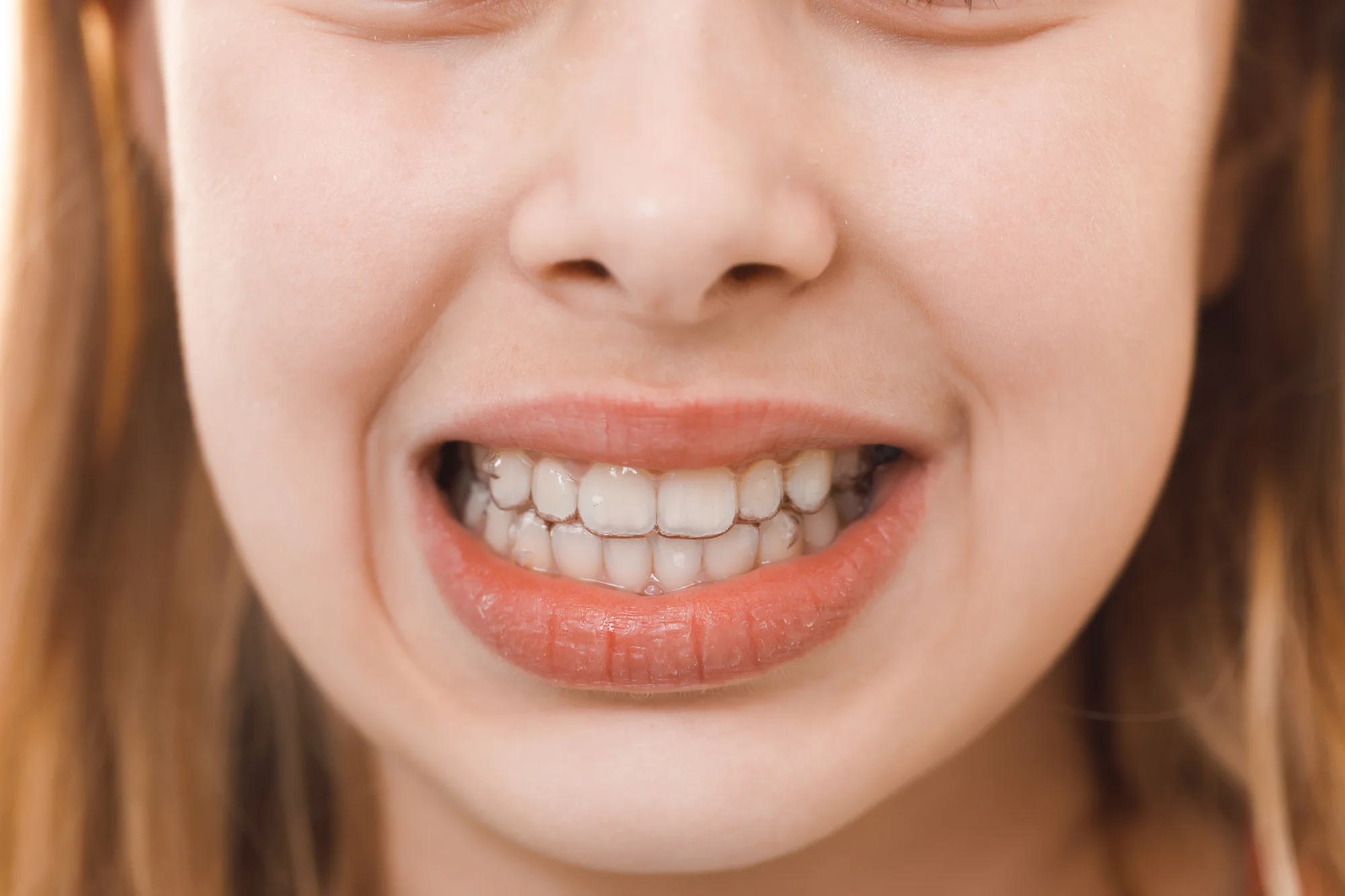
The short answer is yes, Invisalign can fix an overbite in most cases. If you have been living with upper front teeth that overlap your lower teeth more than they should, clear aligners are a genuinely effective way to correct that.
A small amount of overlap is normal. In a healthy bite, the top front teeth usually cover about one-third to one-half of the bottom front teeth. The problems start when the overlap is too deep, usually more than 2 to 4mm. This can affect how you chew, how your jaw feels, how you speak, and your long-term dental health.
In this article, we explain how Invisalign treats an overbite, who it is suitable for, how long it takes, its limits, and what to expect from the treatment process.
What Are the Causes of Overbite?
Overbites usually happen because of a mix of different factors. Genetics plays a big part. The size and shape of your jaw can be inherited, so if a parent had an overbite, you might too.
Childhood habits can also cause an overbite. Thumb-sucking or using a pacifier past the age of three can push the top teeth forward and affect how they grow. Prolonged dummy or thumb use can make the upper teeth tip outwards.
Other causes include tongue thrusting, where the tongue pushes too far against the teeth, uneven jaw growth as a child, missing lower teeth, and teeth grinding. All of these can make an overbite worse over time.
Why Should You Fix an Overbite?

An overbite is not just about looks, because it can affect your health too.
It puts extra pressure on your jaw joint, which can lead to pain, clicking, headaches, and other TMJ problems. Your teeth also take more wear, leading to faster enamel erosion, chips, cracks, and a higher risk of decay.
The lower teeth can rub against the gums behind the upper teeth, causing gum recession and disease. In some cases, an overbite can make it harder to speak clearly or even affect your airway during sleep.
Fixing an overbite early can prevent these problems, make treatment easier, and protect your smile and confidence.
How Does Invisalign Fix an Overbite?
%20(1).webp)
If you're dealing with an overbite, you're not alone. It's one of the most common alignment issues. The good news is that Invisalign has proven to be a highly effective solution, but the results depend on the severity of your overbite. Invisalign uses a series of clear, custom-made aligners to gently move your teeth into better positions. For an overbite, the aligners shift both your upper and lower teeth to bring your bite into balance.
Sometimes small tooth-coloured bumps called SmartForce attachments are added. These give the aligners extra grip to make more precise movements. Elastics (small rubber bands) may also be used to help move the lower jaw forward and the upper teeth back, reducing the overlap.
Before treatment starts, every tooth movement is planned digitally using ClinCheck software and a 3D iTero scan. You can even see a preview of your corrected bite beforehand.
Invisalign works best for dental overbites, which are caused by tooth positioning. Skeletal overbites, caused by jawbone differences, may need other treatments and sometimes surgery.
How Invisalign Fixes Overbite in Young and Teen Patients
Children and early teens, usually under 12 or 13, have an advantage because their jaws are still growing. They can use Invisalign Mandibular advancement, which has small plastic wings in the aligners. These gently move the lower jaw forward while also straightening the teeth.
This method works on both teeth and jaw growth at the same time, which isn’t possible once growth is finished. While Invisalign is a popular option, traditional braces for children recommended by a children's dentist are also effective for overbite correction. Young patients tend to respond faster to orthodontic treatment, making overbite correction quicker and more efficient.
How Invisalign Fixes Overbite in Adult Patients
For adults, jaw growth is complete, so Mandibular advancement isn’t used. Instead, elastics with the aligners help guide the bite into place. In more complex cases, they may also add a Motion Appliance to create greater movement and improve the bite alignment.
Adults may take a little longer to treat the same overbite as teens, but Invisalign is still effective. Treatment usually lasts between 12 and 24 months.
How Long Does Invisalign Take to Fix an Overbite?
The time Invisalign takes depends mostly on how severe your overbite is. Mild overbites may take 4 to 12 months, moderate cases 12 to 18 months, and severe or complex overbites can take 18 to 24 months.
A clinical study of 50 patients found the average treatment time was about 18 months, using around 25 sets of aligners.
Treatment length is affected by other issues like crowding or spacing, your age, and how well you wear your aligners. Aligners should be worn 20 to 22 hours a day; not wearing them enough can slow progress or affect results.
What are the Benefits of Using Invisalign for an Overbite?
.webp)
A Discreet Solution
Invisalign aligners are made from clear, smooth SmartTrack plastic that is virtually invisible when worn. There are no metal brackets catching the light and no wires running across your teeth. The transparent design allows you to straighten your teeth confidently without drawing attention. That is a big reason why they are so popular with adults and working professionals across London and the UK.
Easy Oral Hygiene
The aligners pop out when you eat, drink, brush, and floss. Your oral hygiene routine stays exactly the same as it was before treatment. Traditional metal and ceramic braces, brackets, and wires create all sorts of nooks for food to get trapped in, making cleaning a real chore and increasing the risk of plaque build-up.
Comfortable to Wear
The smooth, BPA-free plastic has no sharp edges, no protruding brackets, and no wires that can poke the inside of your cheek. There are no emergency trips to get a broken wire fixed.
Fewer Appointments
Invisalign typically requires fewer check-in visits than traditional braces, which need wire tightening every 4 to 8 weeks. At Zental, some patients benefit from remote monitoring that reduces the need for in-person appointments even further.
A Preview of Your Results
Before treatment starts, you get to see a digital 3D simulation of your finished smile through ClinCheck software. Every stage of tooth movement is planned from start to finish, so you know what to expect and can feel confident about the outcome. You can also review Invisalign before-and-after pictures, which can help you better understand the results you can expect, especially for cases similar to yours.
Are There Any Limitations to Invisalign for Fixing an Overbite?
Invisalign works very well for dental overbites, where the problem is the position of the teeth. Severe skeletal overbites, caused by the jaw bones, may need surgery. Invisalign can help before or after surgery, but it cannot move bone.
For very deep bites, Invisalign may only achieve part of the planned correction. Realistic expectations and an experienced orthodontist are important.
Treatment also depends on wearing the aligners 20 to 22 hours a day. Some cases may need extra appliances like elastics, and Invisalign can cost more than traditional braces.
Overall, Invisalign is highly effective when used correctly, but it may not be the right choice for every overbite.
What to Expect During Overbite Treatment with Invisalign
Here’s a simple overview of how Invisalign treatment works at Zental:
- Step 1: Consultation: Your orthodontist checks your bite with X-rays, photos, and a digital scan using an iTero scanner. This shows whether your overbite is dental or skeletal, how severe it is, and if Invisalign is suitable.
- Step 2: Digital treatment plan: Using ClinCheck software, your orthodontist creates a 3D simulation showing how your teeth will move at each stage. You can see the expected final result before starting.
- Step 3: Aligner fitting: Your first set of custom aligners is fitted, along with any SmartForce attachments. You’ll be shown how to insert, remove, and care for them.
- Step 4: Wearing your aligners: Each set is worn for 1–2 weeks, 20 to 22 hours a day. Remove them only for eating, drinking anything besides water, and cleaning your teeth.
- Step 5: Progress check-ins: Regular appointments let your orthodontist monitor progress and make adjustments if needed.
- Step 6: Retainers: After treatment, retainers keep your teeth in place. This is essential, as teeth can shift back without them.
If you are curious whether Invisalign could work for your bite, book a consultation to get a personalised assessment.
So, Can Invisalign Fix Your Overbite?
For most mild to moderate overbites, the answer is yes. Invisalign is a discreet, comfortable, and clinically proven way to correct your bite, backed by over 20 years of research and millions of successful treatments.
The key is an accurate diagnosis and a well-planned treatment from an experienced orthodontist. For severe skeletal overbites, other approaches or combined treatments may be needed, and your clinician will guide you on the best option.
FAQ
How long does it take to fix an overbite?
Mild overbites can take four to twelve months. Moderate cases usually take twelve to eighteen months. Severe cases can take eighteen to twenty-four months. Wearing aligners for twenty to twenty-two hours a day is key to staying on schedule. A study of fifty patients found the average treatment time was about eighteen months, with most patients very satisfied.
Is Invisalign painful when fixing an overbite?
Invisalign is generally much more comfortable than braces. Some mild pressure or tenderness can happen for a day or two when switching to a new set of aligners. This just shows your teeth are moving. Over-the-counter pain relief is usually enough, and discomfort tends to ease as treatment continues.
Can Invisalign fix severe overbites?
Invisalign can treat many moderate to severe dental overbites, often with elastics or extra appliances. Severe skeletal overbites caused by the jaw bones may require surgery. Invisalign can still be used before or after surgery as part of the overall plan.
Should I choose Invisalign or braces to fix my overbite?
Both Invisalign and braces can effectively correct overbites, and the best choice comes down to the severity of your case, your lifestyle, and what matters most to you. Braces may offer more control for complex or severe bite correction. Invisalign suits patients who want a discreet, removable option with easier day-to-day maintenance. For mild to moderate overbites, outcomes are comparable between the two. If you are weighing up your options, you can read more about the different types of braces available or speak to an orthodontist to find the right fit.
How much does Invisalign treatment for an overbite cost?
In the UK, treatment ranges from around one thousand five hundred pounds for mild cases to five thousand five hundred pounds for complex cases. Most moderate to complex cases cost between three thousand one hundred and four thousand eight hundred pounds. Zental offers flexible payment plans and zero percent finance. For a personalised quote, book a consultation or check our orthodontic fees page.


