


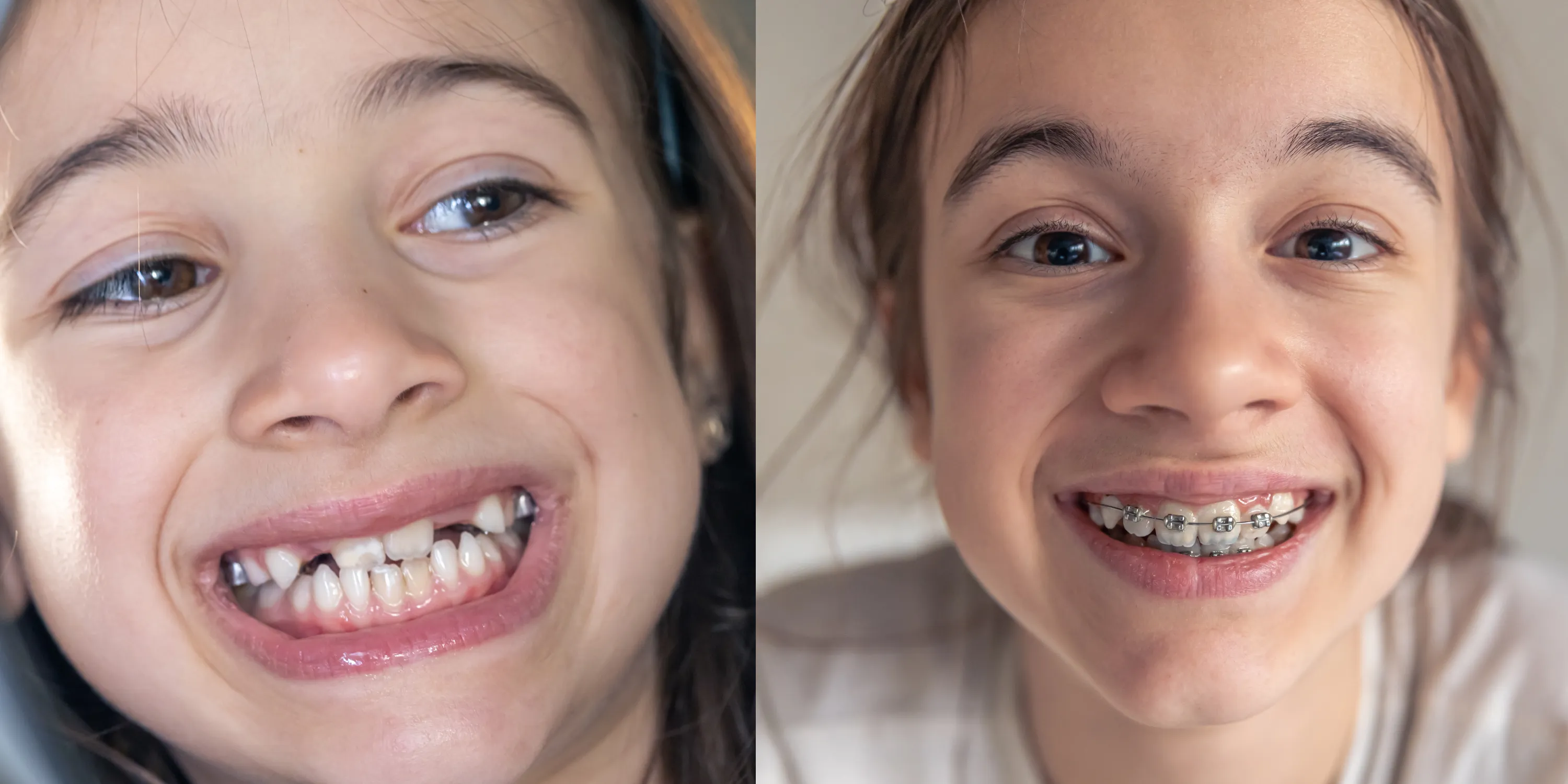
If you're considering braces, you're probably wondering what kind of transformation awaits you. Maybe you're picturing yourself with a perfect Hollywood smile, or perhaps you're anxious about how long you'll need to wear them. The good news is that orthodontic treatment has come a long way, and the results can be truly life-changing.
Let's walk through what you can realistically expect from your braces journey, from those first subtle shifts to your stunning final smile.
Our Real Patient Results after Braces
At Zental, we have years of experience working with all sorts of difficult cases. We’ll talk about the most common issues and what results our specialists achieved after treatment.
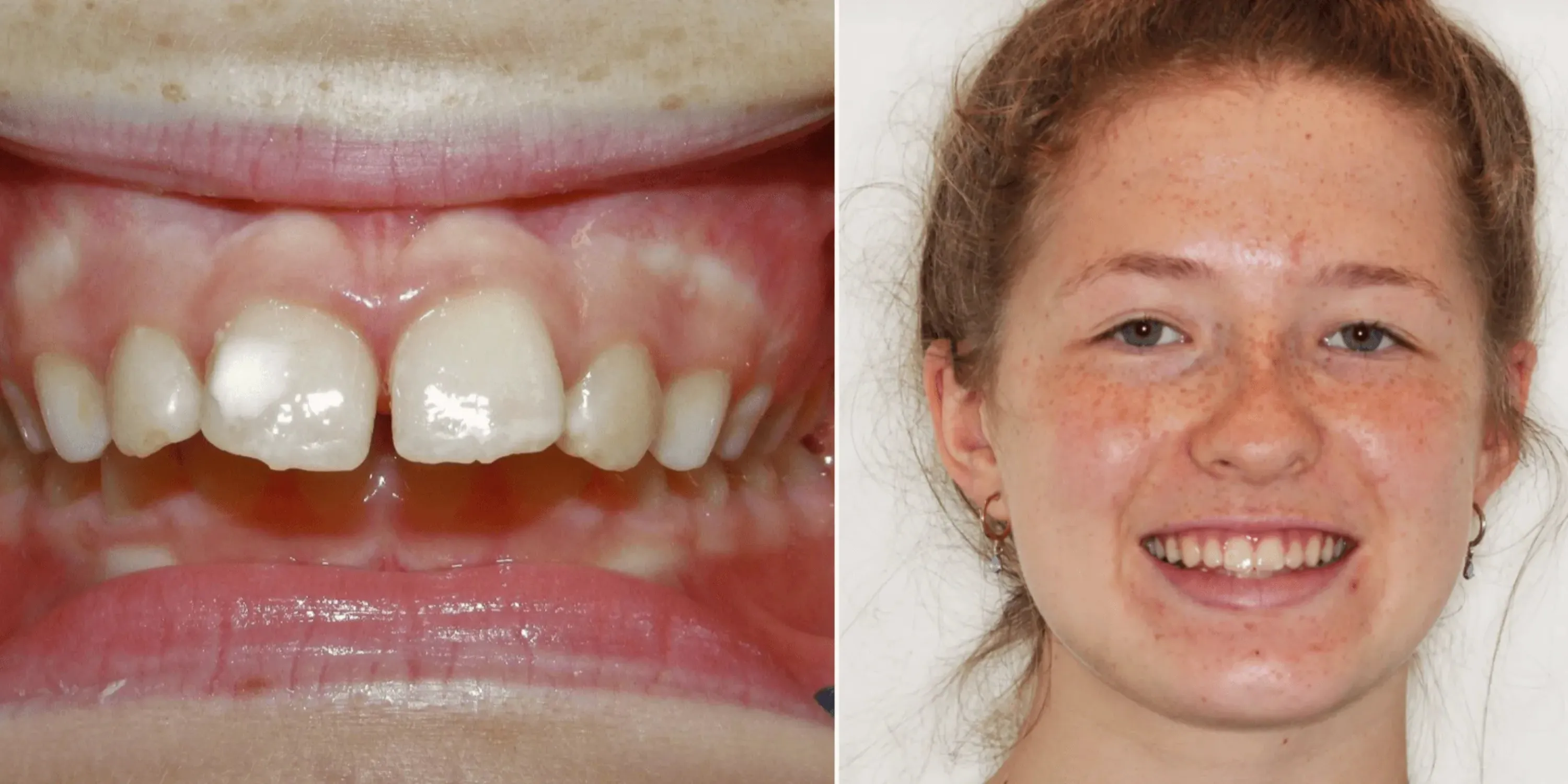
Before and After Pictures of How We Fixed the Overbite of a Patient with Metal and Clear Braces
An overbite, where upper teeth overlap lower teeth by more than 20-25%, is the most common bite problem orthodontists see. Beyond cosmetic concerns, overbites can cause difficulty eating and excessive wear on back teeth. Treatment involves metal braces or clear braces combined with elastics and sometimes additional appliances to guide your jaw into the proper position.
Before braces, the patient had crowded upper teeth that protruded forward, leading to an increased overjet and an uneven bite.
For this case, we used ceramic braces. Our specialist orthodontist corrected both the crowding and the bite, reducing the risk of injury to the front teeth. After the braces, she had a beautiful smile and a much more comfortable, functional bite.
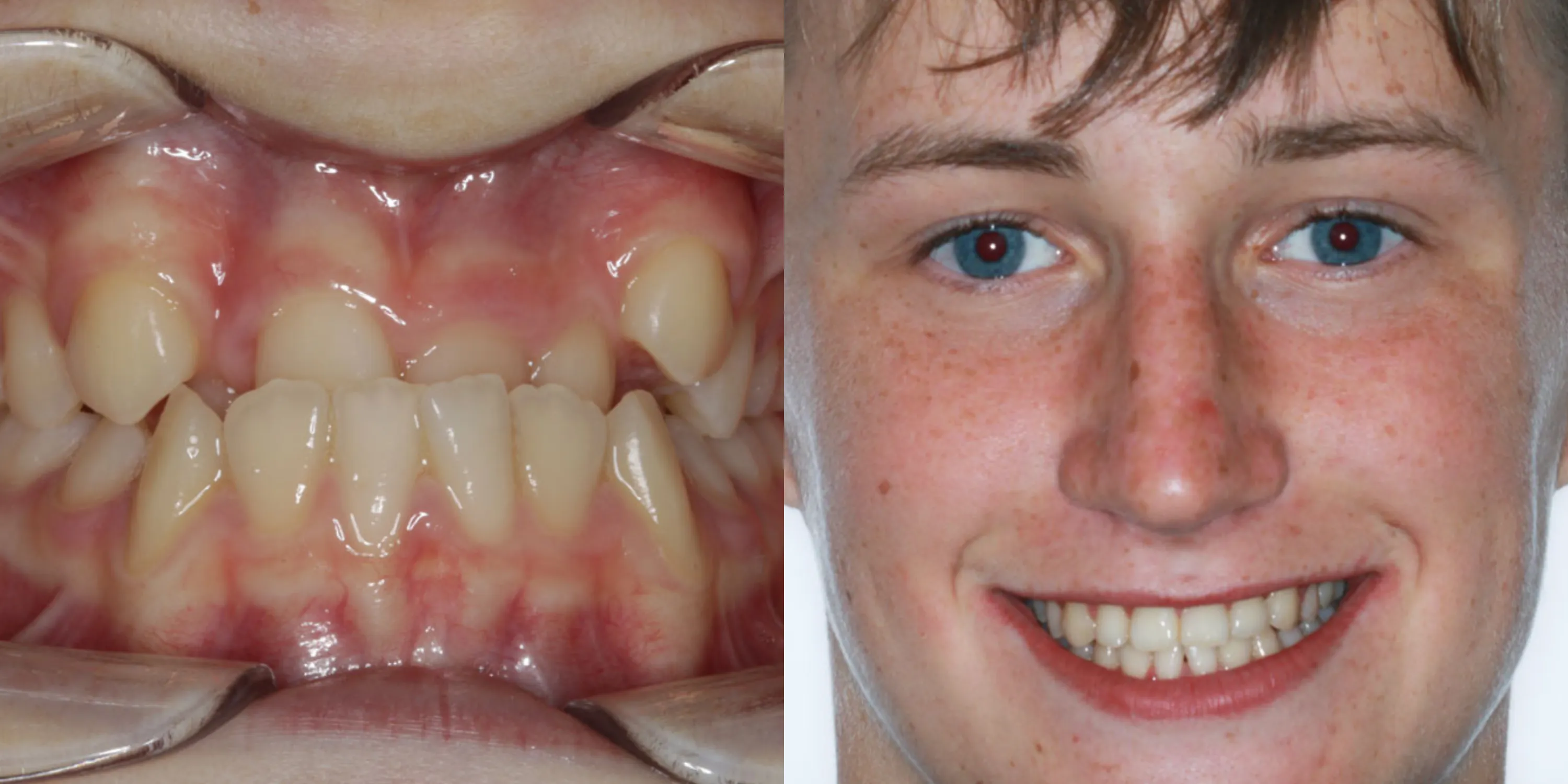
Before and After Pictures of How We Fixed the Underbite of a Patient with Ceramic Braces
When lower teeth sit in front of upper teeth, you have an underbite. This can be particularly destructive to teeth and gums over time. Early intervention often prevents the need for jaw surgery later, with treatment typically involving any type of braces, elastics, and sometimes functional appliances to encourage proper jaw growth.
Before braces, this patient had a reverse bite and dental crowding. Our orthodontists could successfully correct them with ceramic braces, creating a healthy overlap of the front teeth without the need for surgery. Although challenging, the treatment was a great success, and the patient can now eat, chew, and smile with far more confidence.
When Will You See Results?
Even though all cases are different, and your progress depends solely on your individual pace, we have generalised a “range” so you'll know what to expect.
- First few weeks: Teeth start moving deep down, even if you can’t see them yet. You might feel some soreness, but that’s a sign your braces are working.
- Months 1-3: Little changes start showing. Crooked teeth may look straighter, and gaps might begin to close. You’ll notice these in the mirror.
- Months 4-12: Big progress time! Your smile changes a lot, and people will start spotting it too.
- After 12 months: Fine-tuning phase. Teeth are mostly in place; now, small tweaks to get everything perfect.
- Overall treatment: Usually takes 18-24 months, but some fix faster (6-12 months), others longer (up to 3 years). Your orthodontist will tell you what to expect.
What Factors Can Influence Your Results?
Everyone’s orthodontic journey is different, and no two smiles respond in exactly the same way. A number of key factors can affect how smoothly treatment progresses and the final result you achieve.
Your Age: How It Affects Treatment
Age plays an important role in orthodontic treatment, which is why many patients ask, "At what age should I get braces?" Teenagers often experience faster treatment thanks to their developing bone structure. Their jaws are still growing, making them highly responsive to orthodontic treatment. Plus, their more malleable bones allow for easier tooth movement and potentially more noticeable facial improvements.
With that said, adults shouldn't feel discouraged. Whilst treatment might take slightly longer due to denser bone structure, you'll still achieve excellent results with consistent care. Modern treatment options like clear aligners have made adult orthodontics more appealing and accessible than ever.
Severity of Your Case
Your specific orthodontic needs dramatically impact treatment duration. Minor corrections, such as small gaps or slight rotations, might be completed in just 6-12 months. Standard orthodontic issues typically require 12-24 months, whilst severe crowding, large gaps, or significant jaw misalignments often need 24-36 months or more. Some skeletal issues might even require surgical intervention alongside braces for optimal results.
Patient Compliance: The Key to Success
Here's something many people don't realise: you have enormous control over your treatment success. We’d advise you to also be aware that patient compliance is one of the most significant factors affecting both timeline and final results.
This means wearing rubber bands exactly as prescribed, maintaining excellent oral hygiene throughout treatment, attending all adjustment appointments, following dietary restrictions to protect your braces, and, for clear aligner patients, wearing them for the full 20-22 hours daily. Skip any of these, and you're looking at delayed results or even treatment failure.
Your Oral Health: Starting with a Clean Slate
Before braces can work their magic, your mouth needs to be healthy. You must treat any gum disease or tooth decay first. During treatment, regular professional cleanings become even more important. Poor oral hygiene doesn't just risk cavities; it can actually slow down tooth movement and delay your results.
How to Keep Your Smile Perfect?
Why Retainers Are Important (Not Optional)
Here's a truth that might surprise you: teeth have memory. Without retainers, they'll try to drift back to their original positions. Your orthodontist can warn you that without consistent retainer wear, your teeth may start shifting within weeks, potentially undoing years of treatment.
Your Retainer Wear Schedule
The first 3-6 months after braces removal are critical. You'll need to wear your retainer 20-22 hours daily, removing it only for eating and cleaning. This is when teeth are most vulnerable to shifting.
From months 6-12, you can usually switch to night-time only wear. Your teeth are beginning to stabilise in their new positions, but they still need that nightly reminder to stay put.
After the first year? Plan on wearing retainers at least three nights per week for life. Some orthodontists recommend every other night indefinitely. Yes, it's a lifelong commitment, but it's a small price for keeping your beautiful new smile.
What Happens If You Don't Wear Your Retainer
Skipping your retainer isn't just risking a little shifting. Your teeth are highly likely to move back toward their original positions. Many adults seeking braces are actually correcting previous orthodontic relapse from not wearing their retainers. Don't let your investment and effort go to waste.
Wrapping Up
Orthodontic treatment isn’t just about straightening teeth. It is an investment in your confidence and long-term oral health. Most patients notice changes within the first 1 to 3 months, with full treatment usually taking 18 to 24 months, and results can last a lifetime with proper retention.
The key to success is choosing the right treatment and following the plan closely. Whether you are a teenager or an adult ready to invest in your smile, modern orthodontics can fit around your lifestyle. Book a consultation at Zental today and take the first step towards a healthier, more confident smile.
FAQ
Do the results of braces look natural?
Yes. Orthodontic treatment is designed to create harmony between your teeth, bite, and facial features. The goal is not an artificial “perfect” smile, but a natural alignment that suits your face.
Can the results of braces vary from person to person?
Absolutely. Every smile is unique. Bone structure, bite type, tooth shape, and how teeth respond to movement all influence the final outcome. Two people with similar crowding may still have different before and after braces results.
Do braces only improve front teeth?
No. While front teeth changes are the most visible in before and after photos, braces also correct back teeth alignment and bite position. These adjustments improve chewing, balance, and long-term dental health.
Do braces close all gaps permanently?
Braces can close gaps effectively, but long-term stability depends on retention. Without proper aftercare, spacing may gradually return over time.
Will my teeth look bigger or smaller after braces?
Teeth do not change size, but alignment can create that illusion. When teeth are straight and evenly spaced, they often appear more proportionate and sometimes slightly larger because more of the surface becomes visible.
Will the results of braces continue improving after removal?
Yes. After braces are removed, minor settling can occur as teeth stabilise in their new positions. With proper retention, your smile continues to look natural and refined.
Can braces fix asymmetrical smiles?
In many cases, yes. Braces can correct uneven tooth heights, midline shifts, and bite imbalances that cause asymmetry. The extent of correction depends on whether the issue is dental or skeletal.


