


Dental implants are one of the most reliable ways to replace missing teeth, but many patients do not realise there are different types of implant restorations available. One option that is becoming increasingly popular in the UK is the screwless dental implant.
Screwless dental implants are designed to create a natural-looking smile without visible screw access points. They are often chosen for their appearance, comfort, and seamless finish.
In this guide, we explain what screwless dental implants are, how they work, what they cost, who they are suitable for, and how they compare to traditional implant options.
What Are Screwless Dental Implants?
Screwless dental implants are implant-supported teeth that do not use a visible screw to hold the crown in place. Instead, the crown is attached using dental cement or a secure friction-fit connection between the implant parts.
This creates a smooth and natural-looking tooth without a small access hole on the biting surface.
With traditional screw-retained implants, a small screw passes through the crown to secure it to the implant underneath. The opening is then covered with filling material. While this method works very well, some patients prefer screwless implants because they offer a cleaner and more seamless appearance.
Screwless dental implants are becoming more popular among patients looking for a natural finish, especially for front teeth, where appearance matters most. Patients exploring the full range of restorative options should also consider the different types of dental implants available, from single-tooth replacements to full-arch solutions.
How Do Screwless Dental Implants Work?

The implant procedure is very similar to a traditional dental implant. The main difference comes at the final stage, when the crown is attached to the implant.
Here is how the process usually works:
- Consultation and imaging: Your dentist will first examine your teeth, gums, and jaw using X-rays and 3D scans. This helps them check your bone health and decide whether a screwless implant is the right option for you.
- Implant placement: A small titanium or zirconia implant post is placed into the jawbone under local anaesthetic. Many clinics also offer sedation for patients who feel nervous about treatment.
- Osseointegration: Over the next three to six months, the jawbone gradually heals around the implant. This process is called osseointegration, which means the implant becomes securely fused with the bone.
- Abutment and crown fitting: Once healing is complete, the final crown is attached to the implant. With screwless dental implants, the crown is either bonded into place with dental cement or secured using a precise friction fit connection instead of a visible screw. This creates a smooth and natural-looking result.
How Stability Is Achieved Without Screws
It is normal to wonder how a crown can stay secure without a screw holding it in place. The good news is that screwless dental implants are designed to be very stable when placed correctly.
- With cement-retained systems, a strong dental-grade cement is used to bond the crown to the abutment. Once it sets, it creates a firm connection that can withstand normal chewing and biting forces.
- With friction-fit systems, the stability comes from the shape of the implant components. The abutment is slightly tapered and is pressed into a matching socket inside the implant. This creates a tight mechanical lock that holds the parts securely in place and prevents movement during everyday use.
Friction-fit connections require more force to separate than other connection types and exhibit very little movement under pressure.
With proper placement and good oral care, screwless dental implants can last 10 to 15 years or longer.
Types of Screwless Dental Implants
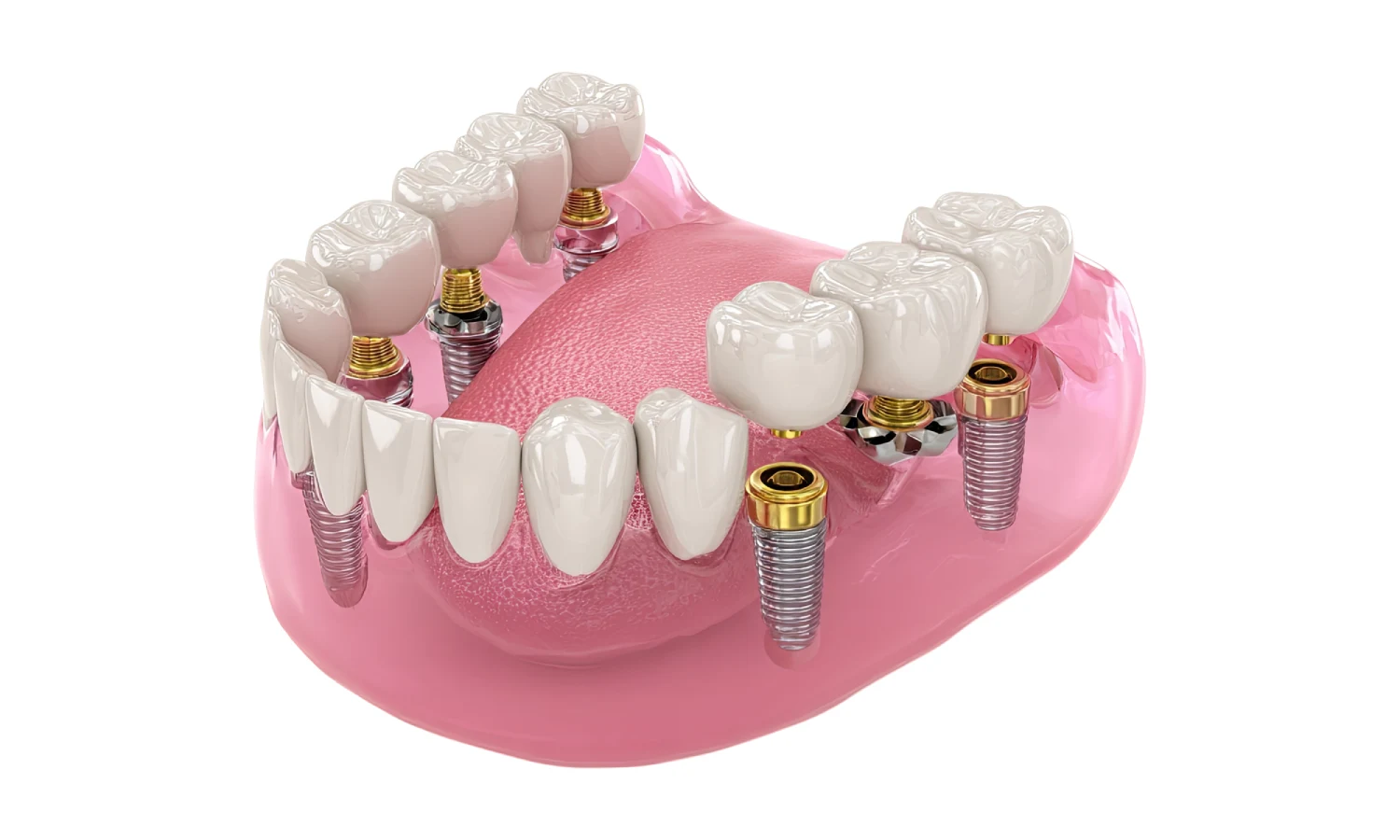
Screwless dental implants are not a single technique. There are a few different ways dentists can secure the crown without using a visible screw. Each option works slightly differently and may be chosen based on your clinical needs and the position of the tooth.
Cement-Retained Implants
This is the most common type of screwless implant. In this method, the crown is fixed onto the abutment using strong dental-grade cement. Once it is in place, the tooth's surface remains smooth, with no visible holes.
Cement-retained implants are often used for single-tooth replacements, especially in visible areas such as the front teeth. They are useful when a screw-retained design would leave the access hole in an awkward or visible position.
One important point is that any extra cement must be fully removed by the dentist during placement. If small amounts are left behind under the gum line, it can irritate the surrounding tissue. For this reason, careful placement by an experienced clinician is very important.
Friction-Fit or Conical Connection Implants
This option does not use cement at all. Instead, the abutment is shaped with a slight taper and is pressed into a matching socket inside the implant. The tight fit holds everything securely in place without the need for a screw or cement.
Some systems use what is called a Morse taper design, where the angle is extremely precise, and the connection relies almost entirely on friction to stay stable.
From a clinical perspective, conical connection implants are designed to distribute chewing forces more evenly across the implant. This can help reduce stress on the surrounding bone.
Research has shown that these systems may also provide better long-term bone stability than some traditional connection designs, with less bone loss observed in early studies.
Benefits of Screwless Dental Implants
The main advantages of screwless dental implants come down to appearance, comfort, and long-term performance. Here are the key benefits:
- More natural appearance: The crown has no screw access hole, so the surface looks smooth and more like a natural tooth. This is especially important for front teeth, where aesthetics matter most. Reviewing dental implant results with before-and-after cases can give you a clearer idea of what to expect.
- No risk of screw loosening: Traditional implants use a small internal screw that can sometimes loosen over time. Screwless designs remove this component, which eliminates that specific issue.
- More natural feel: Many patients find screwless crowns feel smoother in the mouth, since there is no filled screw channel on the biting surface.
- Good option for angled implants: In some cases where an implant is not perfectly straight, screwless systems can be easier to use because there is no need to align a screw access hole through the crown.
- Strong clinical performance in studies: Research suggests cement-retained restorations can perform well under different biting forces and may be suitable in a wide range of clinical situations.
- High patient satisfaction: Studies show that both screwless and screw-retained implants achieve high satisfaction levels when properly planned and placed.
If you are considering dental implants, you can explore treatment options through Zental's implant services to see what may be right for your case.
Potential Drawbacks of Screwless Dental Implants to Consider
Screwless dental implants offer many benefits, but they are not the right choice for every patient. It is important to understand the possible limitations before deciding.
- Difficult to remove or repair: Once a cement-retained crown is bonded in place, it can be difficult to remove. If the crown needs repair or replacement, the process is more complex and may sometimes affect the restoration.
- Risk linked to excess cement: If any extra cement is left under the gum line, it can cause irritation and inflammation around the implant. In some cases, this may lead to peri-implant disease if not managed properly.
- Slightly higher maintenance considerations in some cases: Some patients may need more careful monitoring over time, especially if there are any signs of gum inflammation or discomfort. Maintaining good oral hygiene through regular professional cleaning and daily care at home is one of the most effective ways to protect your implant long-term.
- Not always suitable for all patients: Screwless implants may not be ideal for people who grind their teeth heavily or for those with more complex bite or bone conditions. In these cases, a screw-retained option may be more predictable.
When placed and maintained correctly, these risks are low, but they should always be discussed with your dentist so the most suitable treatment plan can be chosen for your needs.
Who Is a Good Candidate for Screwless Implants?

You may be a good candidate for screwless dental implants if you have enough healthy jawbone for the implant to heal properly and you are in good general health. Non-smokers, or people willing to stop smoking during treatment, usually heal better.
They are often a good choice if you want the most natural-looking result, especially for front teeth.
Screwless implants may not be suitable if you grind your teeth heavily, have active gum disease, or have low bone volume. In some cases, a different implant type may be more reliable. For patients who are missing most or all of their teeth. In those cases, full-arch solutions such as all-on-4 or all-on-6 implants may be more practical.
If you're unsure whether screwless implants are right for you, book a consultation with Zental for a full, personalised assessment.
Cost of Screwless Dental Implants in the UK
In the UK, a single dental implant, including the implant, abutment, and crown, usually costs between £1,800 and £3,500. In London, prices are often higher and can range from about £2,800 to £4,500 per tooth. In some higher cost areas, such as Edinburgh, prices may reach £5,000 depending on the clinic and case.
Screwless dental implants do not usually cost more than screw-retained implants. The choice is based on what is clinically best for your mouth, not on price or upgrades. Your dentist will recommend the most suitable option for your case.
There are also a few extra costs to be aware of:
- Consultation: £75 to £150
- Scans and imaging: £45 to £120
- Bone grafting (if needed): from £400
- Tooth extraction (if needed): tooth extraction costs in the UK typically range from £80 to £350, depending on complexity and clinic location.
The final cost of your dental implants depends on factors such as the complexity of your treatment, the materials used, the location of the clinic, and the experience of your dentist.
Screwless vs Screw-Retained Implants: What's the Difference?
Here's a quick side-by-side comparison to help you see how the two approaches stack up:
Neither option is better across the board. The right choice depends on where in your mouth the implant is going, the angle of placement, your bite, and whether you might need the crown removed in the future. A specialist assessment gives you the clarity you need to choose confidently.
Where to Get Screwless Dental Implants in the UK
Screwless dental implants are usually provided by private dental clinics with experience in implant dentistry.
When choosing a clinic, look for dentists with strong implant experience and ask how many similar cases they have treated. A good clinic should be able to offer both screwless and screw-retained options so the treatment can be tailored to your needs.
It is also important that the clinic uses 3D scans and digital planning. These tools help improve accuracy and allow your dentist to plan treatment properly. You should also ask for a clear treatment plan with full costs before you begin.
Zental is one of the best private dental clinic groups in the UK that offers implant treatments across Barnet, Earl’s Court, Knightsbridge, Cricklewood, Bexleyheath, and Milton Keynes, with personalised planning and both screwless and screw-retained options available depending on the patient’s needs.
FAQ
How long do screwless dental implants last?
With good placement and proper oral care, screwless dental implants can last many years. Their lifespan mostly depends on how well you clean your teeth and attend regular dental check-ups.
Are screwless dental implants safe?
Yes. Screwless dental implants are a safe and widely used treatment when carried out by an experienced dentist. The key to success is careful planning, accurate placement, and proper aftercare.
Are screwless dental implants better than traditional implants?
Neither option is better for everyone. Screwless implants are often chosen for their natural appearance and smooth finish. Traditional screw-retained implants can be easier to adjust or remove if needed. Your dentist will recommend the option that best suits your situation.
Can screwless implants be removed?
Cement-retained crowns can be difficult to remove once they are fixed in place. Friction-fit systems may sometimes be removed by a specialist if needed. It is always best to discuss long-term maintenance with your dentist before treatment.
Are screwless implants more expensive in the UK?
No, they are usually similar in cost to traditional implants. The final price depends more on the clinic, materials used, and complexity of the treatment than on the type of retention.
Are screwless dental implants suitable for back teeth?
They can be used in some cases, but back teeth experience stronger biting forces. Because of this, your dentist may recommend a different approach depending on your bite and overall oral health. A full examination is needed to decide what is most suitable.


