


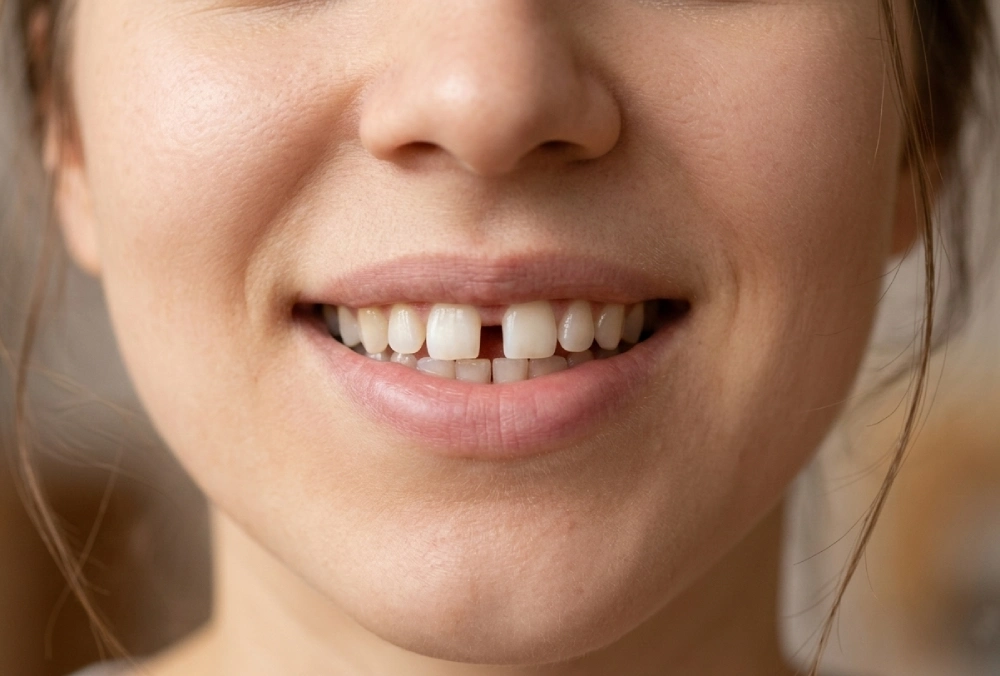
If you've ever felt self-conscious about a gap between your teeth, you're far from being alone. Gaps between teeth, known clinically as diastema, are one of the most common reasons people start looking into orthodontic treatment. And the question we hear all the time at our dental clinic is a simple one: Can Invisalign fix gaps?
The short answer is yes, Invisalign can fix gaps in teeth in the majority of cases. How well it works for you depends on a few things, including what's causing the gap and how wide it is.
In this guide, we'll walk you through what causes gaps in the first place, how Invisalign works to close them, what it can and can't do, how long treatment takes, and what you can expect.
What Causes Gaps Between Teeth? 6 Main Causes
Before we get into how Invisalign closes gaps, it helps to understand why they form. Gaps can show up for a handful of different reasons, and some are more straightforward to treat than others.
Inherited Gap Teeth
Genetics is the single biggest reason people have gaps between their teeth. If your parents or grandparents had spaced teeth, there's a good chance you might too. That's because tooth size and jaw size are both inherited traits, and when your teeth are a bit on the smaller side for your jaw, spaces naturally appear between them. Diastema tends to run in families for exactly this reason. It is also worth knowing that some gaps are simply a family trait and carry no health implications at all.
Missing, Extra, or Undersized Teeth
Sometimes a gap forms not because of your jaw size but because of the teeth themselves. Undersized upper lateral incisors (those are the teeth on either side of your two front teeth) are a common culprit. When those teeth are smaller than average, the surrounding teeth can't fill all the available space, and a gap appears. Also, missing teeth can cause neighbouring teeth to drift over time and create secondary gaps. And in rarer cases, extra teeth hidden beneath the gumline (called mesiodens) can actually push other teeth apart.
Oversized Labial Frenum
This one sounds complicated, but it's quite simple. The labial frenum is that small band of tissue connecting your upper lip to the gum just above your front teeth. You can feel it right now if you run your tongue along the inside of your upper lip. When this tissue is thicker or extends further down than usual, it can sit between the two front teeth and physically prevent them from closing together. If an oversized frenum is the cause, a frenectomy (a minor procedure to reduce the tissue) may be needed before or alongside orthodontic treatment.
Jaw and Teeth Size Mismatch
Even without missing teeth, a simple mismatch between how big your jaw is and how big your teeth are can lead to spacing. If your jawbone is larger compared to your teeth, gaps form naturally between them. This size relationship is typically inherited, which is why the same kind of spacing often shows up across different generations in the same family.
Gum Disease, Tongue Thrusting, and Childhood Habits
A few other things can contribute to gap formation:
- Gum disease (periodontitis) damages the bone that supports your teeth, and over time, this can cause teeth to loosen and drift apart. We must note that gum disease is the leading cause of tooth loss in adults, and any active gum disease needs to be treated before orthodontic work can begin.
- Tongue thrusting is when your tongue pushes against the back of your front teeth every time you swallow, instead of resting on the roof of your mouth. Over time, this repeated pressure can slowly move your teeth forward and create gaps between them.
- Childhood habits like thumb sucking, prolonged pacifier use, or mouth breathing can put outward pressure on developing teeth, contributing to gaps forming as children grow.
How Does Invisalign Close Gaps Between Teeth?

So, how do clear plastic trays actually move your teeth closer together? Invisalign uses a series of custom-made clear aligners. Each aligner is slightly different and gently pushes certain teeth a tiny bit at a time. Over time, this steady pressure helps close the gap.
Here is how it works, step by step:
- 3D scanning and digital treatment planning: Your dentist takes a detailed digital scan of your mouth (often using the iTero scanner) and maps out the exact movements each tooth needs to make. You can even see a preview of what your finished smile will look like before you start.
- Custom aligner fabrication: Based on that digital plan, a personalised series of aligners is created. Each set is designed to target specific teeth at specific stages of treatment.
- Wearing the aligners: You wear each set of aligners for roughly 1 to 2 weeks, for 20 to 22 hours per day. You remove them for eating, drinking anything other than water, brushing, and flossing.
- Attachments and elastics: For more complex movements, small tooth-coloured buttons (called attachments) may be bonded to certain teeth to give the aligners extra grip. Elastics can be used to help bring the upper and lower arches into alignment.
- Refinements: Towards the end of treatment, you may need a few additional aligner sets to fine-tune the final result and make sure everything sits exactly right.
It is also important to know that Invisalign does not just close the gap. It improves your overall bite and alignment at the same time.
After treatment, you must wear retainers. This can be a removable retainer worn at night or a fixed wire placed behind the teeth. Without retainers, teeth can slowly move back to their old position.
What Types of Gaps Can Invisalign Fix?

The reassuring news is that Invisalign works well for a wide range of gap types. Here's a quick breakdown:
- Small to moderate gaps respond particularly well and often close within just a few months of treatment
- Midline gaps (the classic gap between the two upper front teeth) are one of the most frequently treated cases with Invisalign
- Multiple smaller gaps spread across the upper or lower arch can be closed systematically within a single treatment plan
- Gaps up to 6mm per arch can be reliably closed with Invisalign. That's a fairly sizeable space, and the vast majority of diastema cases fall well within this range
- Gaps alongside other alignment issues, like mild crowding, overbite, or crossbite, can be treated at the same time
For gaps that are too wide for aligners alone, Invisalign can sometimes be combined with composite bonding or veneers to close whatever space remains after the teeth have been moved.
What Are the Limitations of Invisalign?
Being upfront about what Invisalign can't do is just as valuable as explaining what it can. Not every gap is suited to clear aligners, and knowing the boundaries helps you make a more informed decision.
Tooth Shape
Invisalign aligners need to fit snugly over each tooth to apply the right amount of pressure. If your teeth are unusually short, rounded, pegged, or of an irregular shape, the aligner may not be able to grip the tooth surface properly. In these situations, your dentist might recommend traditional braces or a combination approach.
Tooth Position
Invisalign can correct tooth rotations of up to about 20 degrees. For teeth that are severely tilted or rotated beyond that point, traditional braces are usually better equipped to deliver the precise directional forces needed. Significant midline discrepancies (where your centre line is off by more than about 2mm) may go beyond what Invisalign can achieve on its own.
Large Gaps Between Teeth
As we mentioned earlier, Invisalign can reliably close gaps up to 6mm per arch. Anything wider than that is not typically recommended for Invisalign alone. Gaps this large are uncommon, but when they do occur, they may need traditional braces or a combination of Invisalign with restorative treatments like bonding or veneers.
Vertical Tooth Movement
Invisalign isn't great at moving teeth up or down within the jawbone (what dentists call intrusion and extrusion). It can manage minor vertical adjustments, especially in the front teeth, but if a tooth needs to be raised or lowered by a significant amount, braces are the more reliable option.
Previous Dental Work
If you have existing dental restorations like bridges, crowns, or veneers, these can interfere with Invisalign treatment. Bridges are a particular concern since they link multiple teeth together, preventing the individual tooth movement that Invisalign relies on. Any major dental work needs to be paused once treatment begins, since changes to tooth shape will affect how your aligners fit. If you've had extensive dental work done, it's best to discuss your options during a consultation so your dentist can map out the right approach.
How Long Does It Take for Invisalign to Close Gaps Between Teeth?
.webp)
This is one of the most common questions. The honest answer is that it depends on you. The length of treatment is based on the size of the gaps, how many gaps you have, how your teeth respond, and how well you wear your aligners.
Here's a general guide:
- Small gaps (1 to 2mm): approximately 3 to 6 months
- Moderate gaps (3 to 4mm): approximately 6 to 9 months
- Larger gaps (5 to 6mm): approximately 12 to 18 months
- Complex or multiple gaps: up to 24 months in some cases
Wearing your aligners properly makes a big difference. They need to be worn for 20 to 22 hours every day to keep your treatment on track. Taking them out too often can slow progress and affect the final result.
You will usually see your dentist or orthodontist every 4 to 6 weeks so they can check your progress and make any changes if needed. After treatment, wearing a retainer is essential to keep the gaps closed. You can choose a removable retainer worn at night or a fixed retainer placed behind your teeth.
If you're curious about how long your specific treatment might take, the best starting point is a consultation at Zental. Your dentist can assess your case, talk you through the options, and give you a personalised timeline.
Bringing It All Together
Can Invisalign fix gaps? In most mild to moderate cases, yes. It is a discreet and comfortable way to close gaps of up to 6mm per arch, while also improving overall alignment.
For larger or more complex gaps, a combined approach may be better. Treatments such as composite bonding, veneers, or dental implants can sometimes deliver a more suitable result.
The best way to know what is right for you is to have your teeth assessed by a qualified dentist. At Zental, we offer calm, patient-focused consultations where we explain your options clearly and without pressure.
FAQ
Should I worry about gaps between my teeth?
Most gaps are harmless and mainly affect how your smile looks. However, food can get stuck in the space, which may lead to plaque, decay, or gum problems over time. If a gap is getting bigger or your gums bleed, see your dentist. A routine check-up is usually the best first step.
How can I close the gaps between my teeth?
There are different ways to close gaps, depending on their size and cause. Invisalign is a popular option in the UK and moves teeth slowly using clear aligners. Other treatments include composite bonding, veneers, or dental implants if a tooth is missing. Your dentist will advise what is best for you.
How much does Invisalign cost for closing a tooth gap?
The cost in the UK depends on how complex your case is and how many aligners you need. Mild cases may start from around £1,500 to £1,950, while more complex treatment can range from £3,500 to £5,500 or more. It is a private treatment and not usually available on the NHS for adults. Many clinics offer payment plans to spread the cost.
Can Invisalign close large gaps or gaps from missing teeth?
Invisalign works best for gaps up to 6mm per arch. Larger gaps may need extra treatments like bonding, veneers, or a dental implant. If a tooth is missing, an implant may be placed before or after moving the teeth. Your dentist will create a plan based on your specific case.
Why should I choose Invisalign for closing gaps between my teeth?
Invisalign aligners are clear and hardly noticeable. They are removable, so you can eat normally and brush your teeth as usual. They are often more comfortable than metal braces and can treat other alignment issues at the same time. A consultation will help you decide if it is right for you.


